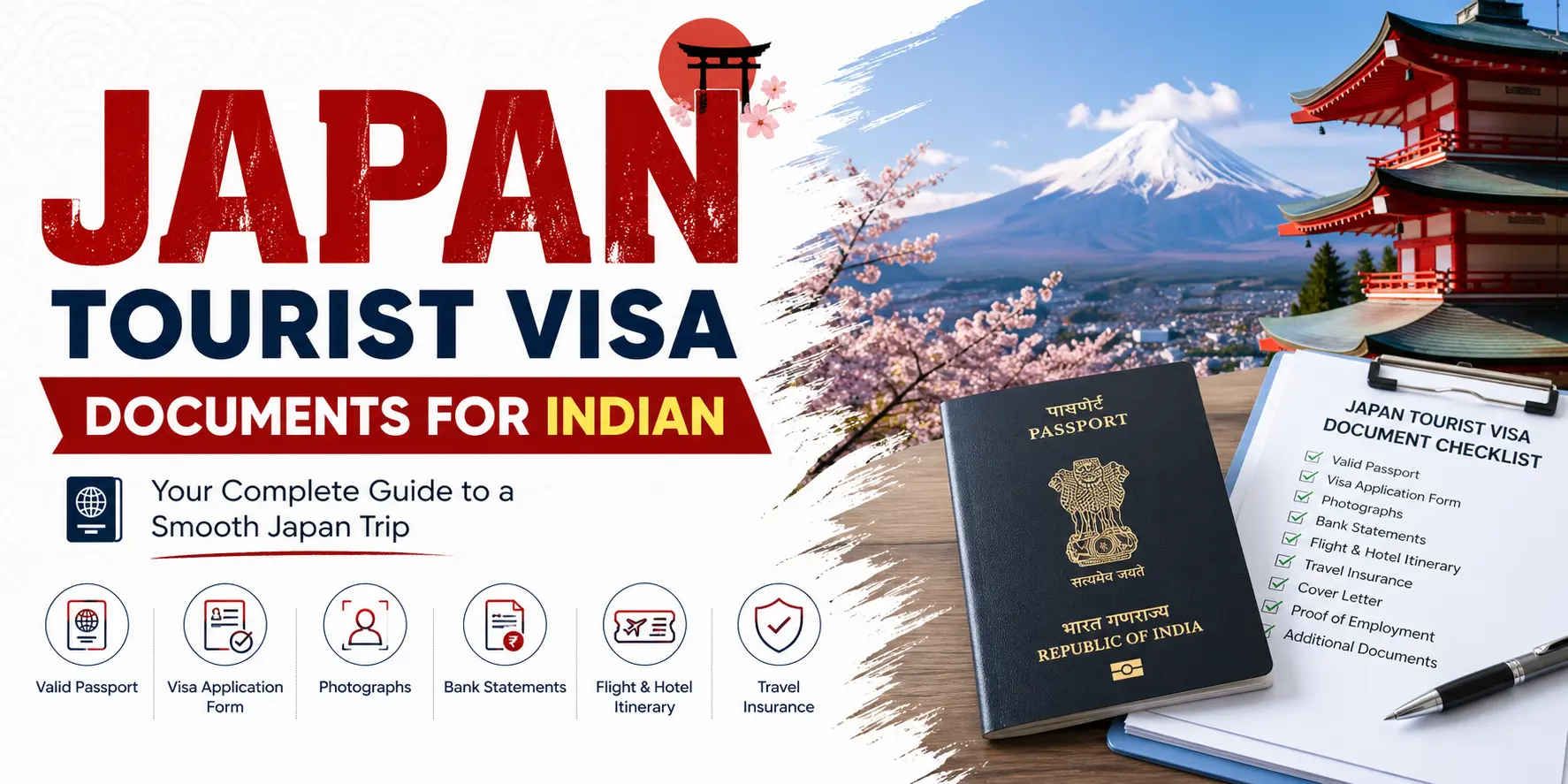
Planning a trip to Japan? Check the complete list of documents required for Japan visa applications, including tourist, business, student, dependent, and transit visas. Learn which documents you need, avoid common mistakes, and prepare a strong application with confidence before you apply.
Quick Answers
Planning your trip to Japan starts long before you book your flights. It starts the moment you sit down to gather your paperwork. Japan's embassy is thorough, methodical, and unforgiving of incomplete applications. Knowing exactly which documents you need and why each one matters - separates a smooth approval from a frustrating rejection.
This guide walks you through every document required for a Japan visa, whether you are travelling as a tourist, student, business professional, dependent, or transit passenger. Before diving in, make sure you also review the Japan visa requirements for the full eligibility picture.
Essential Documents for All Applicants - Quick Summary
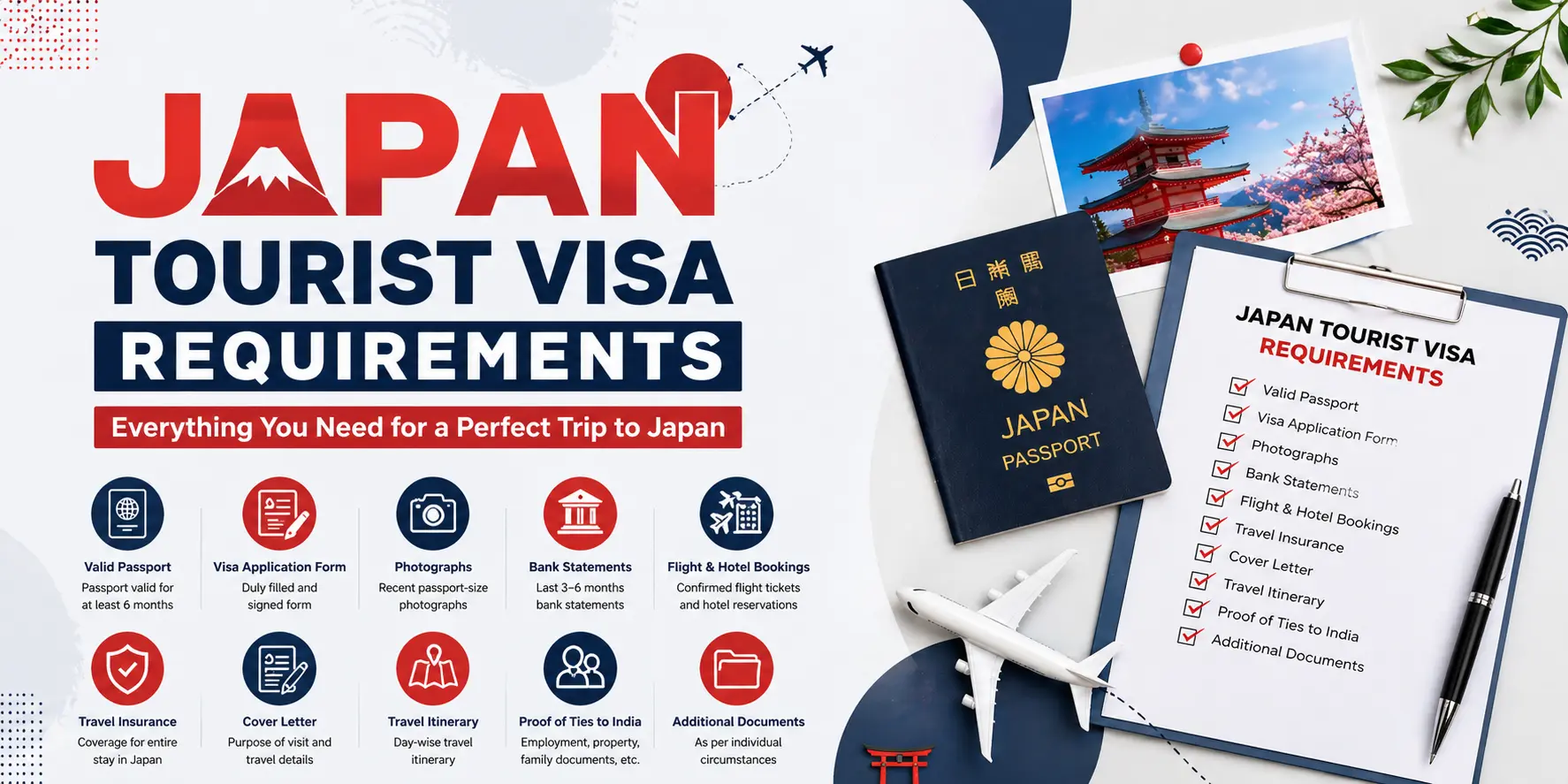
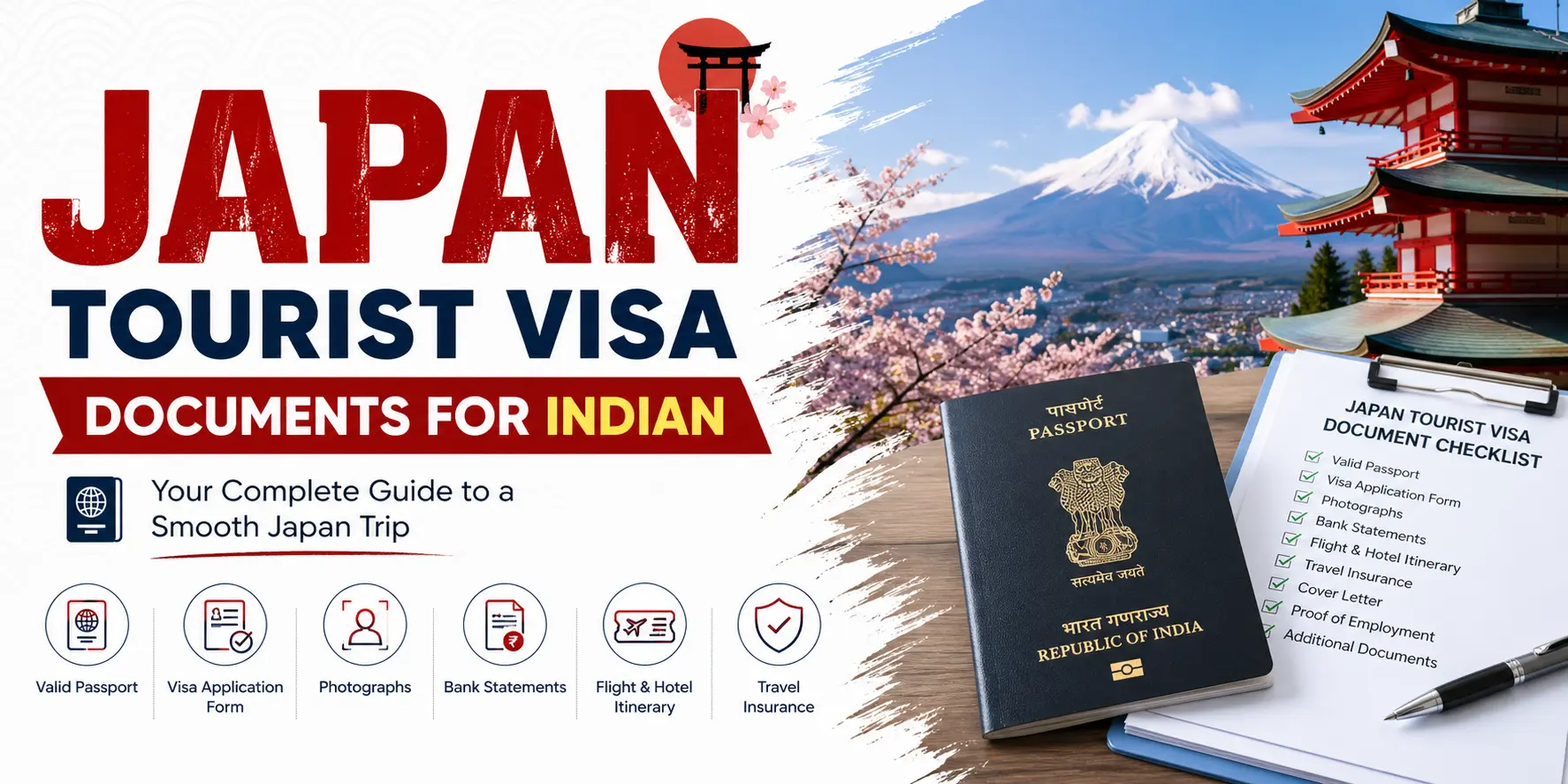
Regardless of the visa type you apply for, every applicant must submit the following core set of documents. Think of these as the non-negotiable foundation of your Japan visa application.
Document | Specification |
|---|---|
Valid Passport | Minimum 6 months validity beyond intended stay; at least two blank visa pages |
Completed Visa Application Form | Download from the Embassy of Japan or VFS Global; no corrections with correction fluid |
Recent Passport Photograph | 45mm × 35mm for Indian applicants; plain white background; taken within the last 6 months |
Passport Copy | Self-attested photocopy of the biographical data page and all pages with previous visas/stamps |
Travel Itinerary | Day-by-day schedule of your planned activities in Japan |
Return Flight Tickets | Confirmed bookings showing entry and exit dates |
Hotel Bookings | Confirmed accommodation for the entire duration of your stay |
Bank Statements | Last 6 months, showing sufficient funds and consistent financial activity |
Cover Letter | Addressed to the Japanese Ambassador or Consul General; detailed itinerary of planned activities |
Pro tip: Every document submitted must have been issued within the last three months and must remain valid at the time of submission, as required by the Embassy of Japan.
Temporary Visitor Visa
The Temporary Visitor Visa - what most people refer to when they say Japan tourist visa allows you to enter Japan for tourism, visiting friends or family, attending non-profit events, or short recreational activities. The stay is permitted for up to 90 days and paid work or profit-generating activities are strictly prohibited during this period.
Since April 1, 2024, Indian nationals can apply for a Japan e-Visa online, which eliminates the need to visit a visa application centre for tourism purposes. The e-Visa is displayed digitally on your smartphone when you arrive at the airport.
For understanding the Japan visa cost applicable to the Temporary Visitor Visa before you begin your application, check our detailed fee breakdown.
Japan Visa Application Documents
Core documents for all applicants
Valid passport with a minimum of 6 months' validity
Duly completed visa application form (no errors or overwriting)
One passport-size photograph meeting official specifications
Photocopy of all relevant passport pages
Detailed cover letter addressed to the Japanese Ambassador or Consul General - vague descriptions like "sightseeing" alone are not acceptable; include specific places you plan to visit, dates, and activities
Confirmed return flight itinerary
Confirmed hotel reservations for the full duration of stay
Bank statements for the past 6 months showing adequate financial means
Income tax returns (ITR) for the last 3 years mandatory for Indian passport holders
If you are a salaried employee:
Last 3 months' salary slips showing consistent income
No Objection Certificate (NOC) or Leave Approval Letter from your employer confirming your travel dates and that your job remains active during your absence
Work-from-home or remote work letter if your payslip address does not match your passport address
If you are self-employed or a business owner:
Proof of business ownership GST certificate, MSME certificate, or trade licence
Business bank account statements for the last 6 months
ITR for the past 3 years
If you are a student:
Bonafide certificate from your educational institution
Parents' bank statements and income proof (since the student is financially dependent)
NOC from college or university confirming the duration of leave
If you are retired:
Pension documents or proof of monthly income
Bank statements for the last 6 months
A personal letter of explanation about your travel purpose and financial capacity
Visa Application Process
Collect all required documents based on your applicant category. Download and complete the official Japan visa application form from the Embassy of Japan website or your designated Visa Application Centre. Apply through MusafirBaba to get expert assistance with document verification, application preparation, and visa submission.
Book your VFS Global appointment before visiting the centre. Since March 2026, VFS requires appointments in most Indian cities and no longer accepts walk-in applications in Mumbai, Bengaluru, Chennai, Hyderabad, Kochi, and Puducherry. Delhi and Kolkata may still allow walk-ins, but you should confirm availability before your visit.
Submit your Japan visa application in person with all supporting documents and pay the applicable visa fee. The embassy typically processes applications within 5 to 7 working days. During peak travel seasons, appointment wait times may increase the overall process to 3 to 6 weeks.
For a full breakdown of timelines, read our guide on Japan visa processing time.
Requirements for Student Visa in Japan
A Japan Student Visa is required when an Indian student plans to enrol in a course lasting more than 90 days. Courses shorter than 90 days may be covered under the Temporary Visitor Visa. The student visa has a success rate of approximately 70% to 80% each year, and accurate documentation is the single biggest factor determining approval.
The most important document for a student visa is the Certificate of Eligibility (COE). This is issued by Japanese immigration authorities and confirms that the student meets Japan's entry requirements. Your Japanese institution applies for the COE on your behalf before you begin the visa application process.
Documents required for the Japan student visa:
Valid passport (minimum 6 months' validity)
Completed visa application form
Passport-size photograph
Certificate of Eligibility (original or copy, including the electronic version if issued digitally)
Admission letter from your Japanese university or language school
Proof of sufficient financial resources bank statements, scholarship award letters, or sponsor's financial documents
Academic transcripts and certificates from your previous institution
Japanese language proficiency certificate (if applying to a Japanese-medium institution)
Health certificate (if required by the receiving institution)
Once you receive the COE from your Japanese school, you submit it along with your visa application at the nearest Japanese embassy or consulate. Student visa processing typically takes up to 3 months, so apply well before the academic term starts. Japan's academic year usually begins in April, July, October, or January.
Japan Business Visa Documents
A Business Visa allows you to attend meetings, conferences, trade negotiations, or business discussions in Japan. It does not permit you to work for a Japanese employer or receive payment from a Japanese company. For longer-term business activities or company management, a separate Business Manager Visa applies.
Note on the Business Manager Visa: As of October 16, 2025, the eligibility criteria for the Business Manager Visa were significantly tightened. Applicants now need to invest a minimum of ¥30 million in a Japanese business (increased from ¥5 million), employ at least one full-time Japanese or permanent resident employee, and demonstrate Japanese language proficiency at approximately JLPT N2 level. Applications submitted before October 15, 2025 continue under the previous rules.
Documents required for a Japan business visa:
Valid passport
Completed visa application form
Passport-size photograph
Cover letter from your employer in India explaining the purpose, duration, and nature of your business visit
Invitation letter from the Japanese company or organisation you are visiting, addressed to the Japanese Ambassador or Consul General include the company's name, address, contact details, and specifics of planned business activities
Your company's business registration documents
ITR for the last 3 years
Business bank statements for the last 6 months
Professional business cards (recommended for strengthening your application)
Proof of your seniority or role in the company (appointment letter, business profile)
Japan Transit Visa Requirements
Not every traveller visiting Japan plans to stay there. Many travellers transit through Japanese airports, especially Tokyo Narita and Osaka Kansai, before continuing to another country. Whether you need a Japan Transit Visa depends on your nationality and the duration of your layover.
Indian passport holders usually need a transit visa if they leave the airport's international transit area or stay in Japan for more than 24 hours between flights. If you remain within the international transit zone during a short layover, you may not need a transit visa. However, always check the latest rules before travelling. You can also review the complete Japan visa requirements to understand the documents and eligibility criteria that may apply to your trip.
Japan Shore Pass: Immigration officers may issue a Shore Pass to eligible transit passengers, allowing them to leave the airport without a transit visa. To qualify, your connecting flight must depart within 72 hours. Since immigration officers grant Shore Passes at their discretion, they do not guarantee approval.
Documents required for a Japan Transit Visa:
Valid passport with at least one blank visa page
Completed Japan visa application form
Passport-size photograph
Confirmed flight itinerary showing your arrival into Japan, your transit layover, and your onward flight to the final destination (include reservation numbers and airline-issued certificates)
Proof of onward travel to a third country (visa or entry permit for the destination country if required)
Proof of sufficient funds to support yourself during your transit stay in Japan
Accommodation booking if you intend to leave the airport and stay overnight
Transit visa processing typically takes 2 to 5 business days. Apply at the nearest Japanese embassy well before your travel date.
Visa Renewal Japan Documents
Visa renewal in Japan formally called an Extension of Period of Stay allows foreign nationals already residing in Japan to continue their stay under the same visa category beyond the current expiry date. You can begin the renewal process up to three months before your current visa expires.
Important: Tourist visa extensions are only granted in exceptional humanitarian circumstances. This section applies primarily to long-term visa holders students, workers, dependents, and other resident visa categories.
Standard documents required for all visa renewals:
Completed Application for Extension of Period of Stay form (standard application form)
Valid passport
Current Residence Card (Zairyu Card)
Passport-size photograph taken within the last 3 months (must meet ISA standards)
Revenue stamp for the renewal fee ¥5,500 for online applications and ¥6,000 for in-person applications submitted on or after April 1, 2025
Additional documents by visa category:
For student visa renewal:
Enrollment certificate from your Japanese institution
Certificate of Taxation (or Tax Exemption) and Certificate of Tax Payment for Residence Tax available at convenience stores using your My Number Card or at your local city hall
Bank statements or pay slips showing income or financial support
If a family member or acquaintance is covering your expenses, submit a certificate of bank balance or a formal letter of financial support
For work visa renewal:
Certificate of employment from your Japanese employer
Most recent tax returns or withholding tax certificate
If you changed employers during the current period of stay, submit all documents verifying your new employment and employer details
For dependent visa renewal:
Documents confirming the sponsor's continued residence status
Updated proof of the sponsor's income and employment
Proof of continued relationship (e.g., recent photograph together, family register update)
Once your renewal is approved, you receive a new Residence Card. The Immigration Services Bureau processes most renewals within a few weeks, though complex cases may take longer.
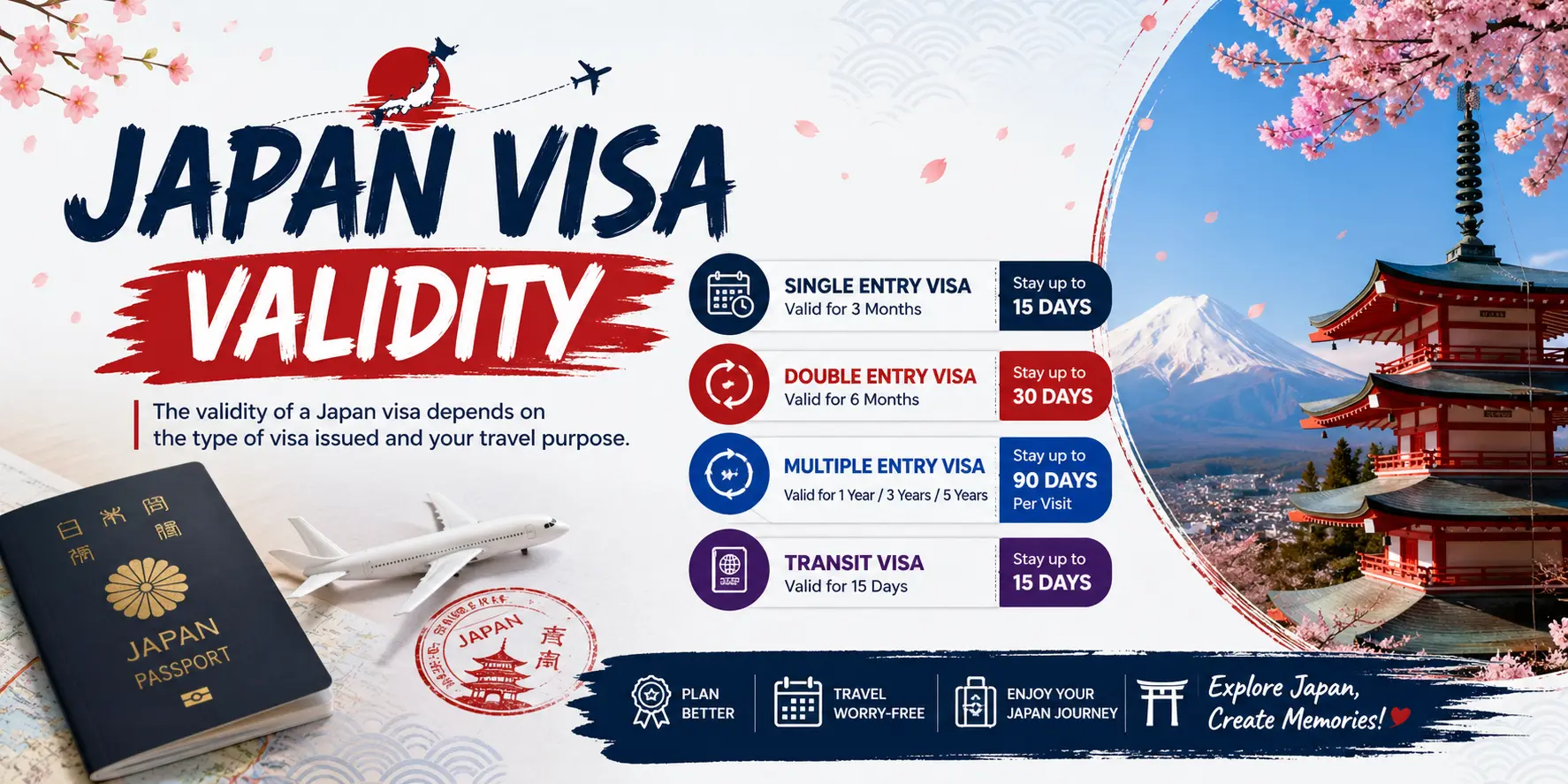
To understand Japan visa validity periods in detail before applying for renewal, read our dedicated guide.
Can a Missing Document Lead to a Japan Visa Rejection?
Yes and it happens far more often than applicants expect. Japan's embassy does not guess at your intentions or fill in information gaps on your behalf. Every missing or incomplete document directly weakens your application, and in many cases, a single absent document is enough for a rejection.
Why Is Japan So Strict About Documentation?
Japan operates one of the most systematic immigration frameworks in the world. The Embassy of Japan reviews applications to verify three core things:
Genuine intent that you are travelling for the purpose stated and will not engage in undeclared work or overstay your visa.
Financial capacity that you can support yourself and any dependents for the entire duration of the stay without financial hardship.
Strong ties to your home country that you have a compelling reason to return after your visit, such as employment, family, or business commitments.
Each document in your file exists to prove one of these three things. Remove a document, and you remove a layer of proof. The consulate has no obligation to request missing documents it can simply reject the application and cite incomplete documentation.
Additionally, vague information in the cover letter has consistently been cited as a rejection trigger. The embassy explicitly states that descriptions like "sightseeing" or "visiting friends" alone are not acceptable applicants must provide specific activity plans, locations, and dates.
Common Situations Where Missing Documents Cause Rejection
bullet point- No Cover Letter or Insufficient Cover Letter
Many first-time applicants treat the cover letter as optional or submit one that simply restates the application form. The cover letter is one of the most critical documents in your file. It establishes your narrative, explains your financial situation, lists your planned activities in Japan in detail, and directly addresses any factors that might raise doubts about your application.
bullet point- Missing Financial Evidence
Bank statements without a consistent balance, or statements submitted without ITR acknowledgements, leave the consulate with an incomplete financial picture. If your account shows a sudden, large deposit immediately before submission (commonly called a "lump sum" deposit), the consulate may flag it as borrowed funds rather than genuine savings and reject accordingly.
bullet point- Absent Employer Documentation
For salaried employees, the NOC and Leave Approval Letter establish that you will return to your job. Without them, the embassy has no confirmation that you have professional ties keeping you rooted at home.
bullet point- Unverified Relationship in Dependent or Spouse Applications
Documents like marriage or birth certificates must be certified and, where required, accompanied by a certified English or Japanese translation. Submitting unofficial copies or uncertified documents leads to rejection.
bullet point- Passport Photograph Non-Compliance
A photograph that does not meet the specifications wrong dimensions, coloured background, shadows, or taken more than 6 months ago causes immediate issues. While this may seem like a minor oversight, it signals lack of attention to detail across the entire file.
What Is the Required Format for the Passport Photo When Applying for a Japan Visa?
Getting your photograph right is more important than it seems. Japanese embassies are precise about photo specifications, and a non-compliant photo can delay or even disqualify your application.
For Indian applicants specifically, the Embassy of Japan in New Delhi sets the photo size at 45mm × 35mm (height × width), which equals 4.5cm × 3.5cm or approximately 2 inches × 1.4 inches. This specific dimension applies to all visa types tourist, business, transit, work, and family visit applications submitted through VFS Global.
Note: The 45mm × 45mm square format used for some other Asian visas is not accepted for Japan visa applications by Indian passport holders. Always confirm the exact size with VFS Global or the Embassy of Japan before your photo is printed.
Complete photo specifications:
Specification | Requirement |
|---|---|
Size (for Indian applicants via VFS) | 45mm × 35mm |
Background | Plain white; no patterns, shadows, or objects |
Photo taken | Within the last 6 months |
Head coverage | Face should cover 70%-80% of the frame; chin-to-crown distance of 32-36mm |
Gap from top of head to edge | 2-6mm |
Expression | Neutral; mouth closed; eyes fully open and looking directly at the camera |
Colour | Colour photograph only (no black and white) |
Glossy paper; 2 copies required | |
Glasses | Not permitted |
Hats or headgear | Not permitted unless for documented religious reasons, and must not cover any part of the face |
Clothing | No white clothing (blends with the background); no uniforms; wear contrast-coloured attire |
Resolution | Minimum 600 DPI |
Digital format (for e-Visa) | JPG, JPEG, or PNG; file size under 120 KB |
Tips for a compliant Japan visa photo:
Visit a professional photo studio and specifically request a Japan visa photo for Indian applicants at 45mm × 35mm. Studios sometimes default to a 45mm × 45mm format confirm the dimensions before the session.
Ensure even lighting on both sides of your face. Shadows on the face or background are automatic rejection triggers.
Do not retouch, filter, or digitally alter the photo. Skin smoothing apps and background replacement tools can introduce artefacts that embassy verification systems flag.
For infants and children applying for dependent visas, the same dimensions and specifications apply. Ensure both eyes are visible, the child is centred, and no hands, toys, or other objects appear in the frame.
FAQ's
Helpful Resources
Related Pages
Apr 29, 2026 | 1 Min Read
Apr 28, 2026 | 1 Min Read
Apr 28, 2026 | 1 Min Read
Apr 28, 2026 | 1 Min Read

Apr 27, 2026 | 1 Min Read
Last Updated: June 19, 2026