Complete Do Dham Yatra 2026 travel guide with Kedarnath and Badrinath itinerary, helicopter booking process, package cost, hotels, registration and expert pilgrimage tips.
Are you seeking peace, spiritual fulfilment and a divine connection with the Himalayas but unsure whether your health, time, or fitness is sufficient for the full Char Dham circuit? The Do Dham Yatra, covering the sacred shrines of Kedarnath Dham and Badrinath Dham in Uttarakhand, offers the perfect answer. Every year, millions of devotees face the same challenge: the desire for a deeply meaningful pilgrimage paired with the reality of limited days, ageing parents and physical constraints. This guide by Musafirbaba resolves that problem with a structured, honest and commercially practical roadmap so that you reach both Dhams safely, efficiently and spiritually enriched.
Quick Answer: Do Dham Yatra at a Glance
Detail | Information |
Dhams Covered | Kedarnath Dham (Lord Shiva) and Badrinath Dham (Lord Vishnu) |
Duration | 5 to 7 days from Haridwar or Rishikesh |
Best Season | May to mid-July and September to mid-October |
Kedarnath Opening 2026 | Approximately 10 May 2026 |
Badrinath Opening 2026 | 23 April 2026 (confirmed) |
Helicopter Booking | IRCTC HeliYatra portal only: heliyatra.irctc.co.in |
Helicopter Fares 2026 | Sirsi: Rs 6,390 | Phata: Rs 10,164 | Guptkashi: Rs 12,762 | Including all charges: 160,000 - 164,999 |
Registration Mandatory | Yes, at registrationandtouristcare.uk.gov.in |
Approximate Package Cost | Budget Rs 18,000 | Deluxe Rs 25,000 | Luxury Rs 38,000+ |
Which Temples Are Included in Do Dham Yatra?
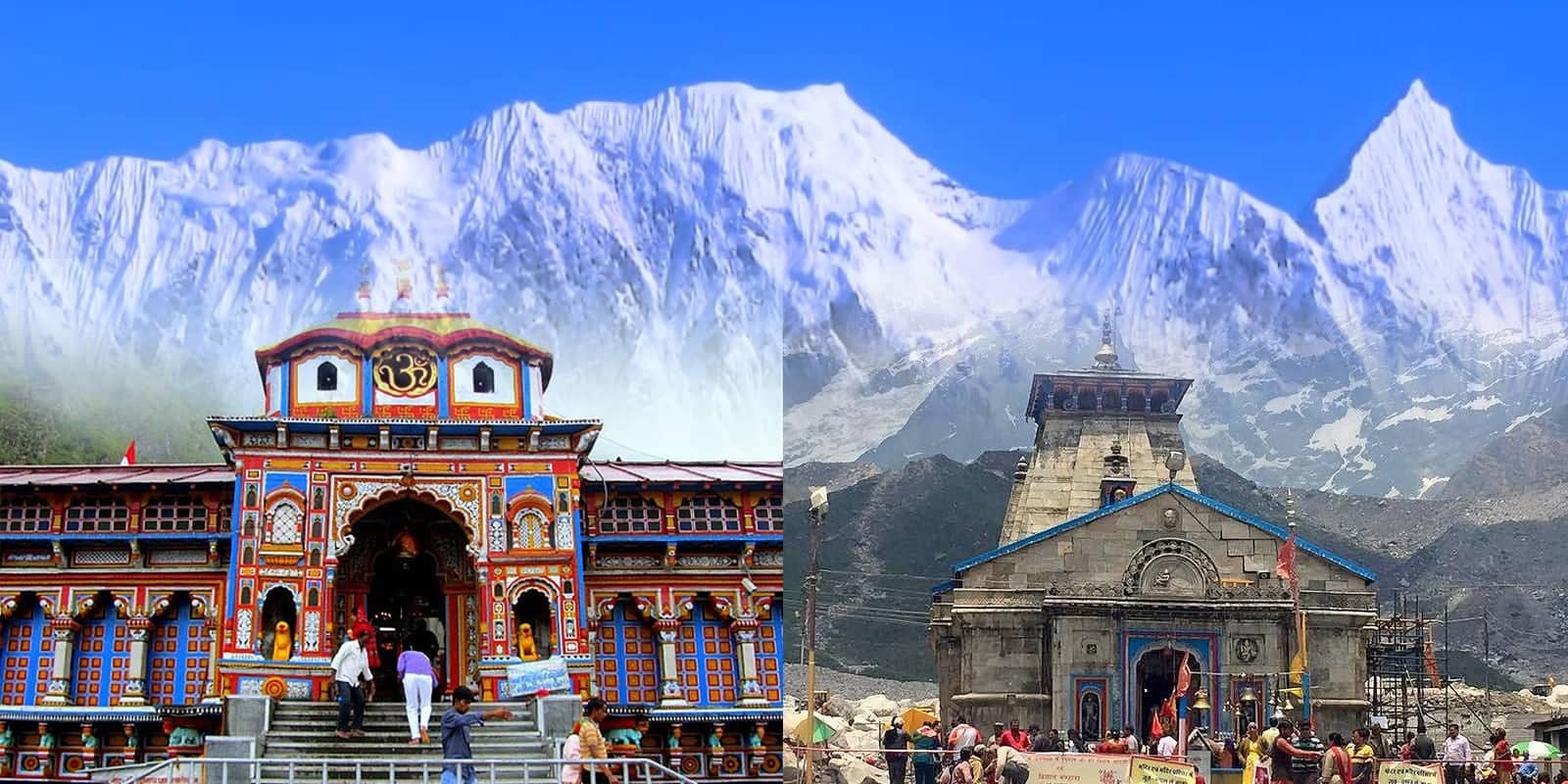
The Do Dham Yatra encompasses precisely two of the four shrines in the revered Char Dham circuit of Uttarakhand, namely Kedarnath Dham and Badrinath Dham. These two sacred temples represent the divine duality of Hindu cosmology and together deliver a spiritually complete pilgrimage experience in a shorter, more manageable timeframe than the full four-shrine circuit.
Kedarnath Dham
Situated at an altitude of 3,583 metres in the Rudraprayag district of Uttarakhand, Kedarnath Temple is one of the twelve Jyotirlingas of Lord Shiva and the highest among them. The temple is believed to have been originally constructed by the Pandavas and later revived by Adi Shankaracharya around 1,200 years ago. The present stone structure, built using massive interlocking grey slabs, stands adjacent to the Mandakini River on the Kedar Peak ridge. Inscriptions in Pali script mark the entrance steps and a large Nandi Bull statue guards the gateway. The sacred Jyotirlinga inside the sanctum sanctorum is a naturally occurring conical rock formation representing Lord Shiva in his Sadashiva form. The temple is accessible via a 16-kilometre trek from Gaurikund or by helicopter and it remains open from approximately early May to mid-November each year.
Badrinath Dham
Badrinath Temple is dedicated to Lord Vishnu and sits on the banks of the Alaknanda River at an elevation of 3,133 metres in the Chamoli district. It is one of the 108 Divya Desams mentioned in Vaishnava scripture and holds singular importance in the Pancha Badri pilgrimage circuit. The temple houses a one-metre-tall black stone idol of Lord Vishnu in a meditative posture, believed to be self-manifested (swayambhu). The structure, revived by Adi Shankaracharya in the 8th to 9th century, comprises the Garbhagriha, Darshan Mandap and Sabha Mandap. Pilgrims traditionally take a purifying dip in the Tapt Kund hot spring before darshan. Badrinath is accessible by road from Joshimath, making it the easier of the two Dhams to reach physically. The 2026 temple season opened on 23 April at 06:15 AM and continues until approximately 13 November 2026.
Together, Kedarnath and Badrinath represent the cosmic union of destruction and preservation, Shiva and Vishnu, forming a spiritually complete Do Dham pilgrimage.
Best Time to Do Dham Yatra
Choosing the correct travel window is the single most important planning decision for a successful Kedarnath Badrinath Yatra. The Himalayan climate is extreme and both temples operate on a seasonal schedule aligned with weather patterns and the Hindu calendar.
Peak Season: May to Mid-July
The post-opening weeks of May through to mid-July offer the most stable conditions for the Do Dham pilgrimage. Skies remain clear in the early morning, wildflowers line the Kedarnath trekking trail and daytime temperatures at Badrinath remain pleasant between 7 and 18 degrees Celsius. This is also when helicopter slots at Kedarnath are most in demand, so early booking via the IRCTC HeliYatra portal is essential during this period.
Shoulder Season: September to Mid-October
After the monsoon retreats in late August, the second-best window opens from mid-September to mid-October. The trekking trails to Kedarnath are refreshed, crowds are thinner than in May and the Himalayan views are exceptionally clear. This season is particularly favoured by photographers and pilgrims seeking a quieter spiritual experience. Helicopter bookings for this phase typically open in mid-June on the IRCTC portal.
Monsoon Period: Avoid July to August
The months of July and August bring heavy rainfall to the Garhwal Himalayas, triggering landslides, road closures and flash floods. Helicopter services for Kedarnath are suspended during this period due to poor visibility and unsafe flying conditions. Pilgrims travelling during monsoon face significant delays, safety risks and potential disruption to their spiritual journey. Travel operators including Musafirbaba strongly advise against planning the Do Dham Yatra during this window.
Month | Temperature Range | Crowd Level | Helicopter Available | Recommended |
May | 5 to 18°C | High | Yes | Strongly Yes |
June | 8 to 20°C | Very High | Yes | Yes |
July | 10 to 15°C | Moderate | No | Avoid |
August | 10 to 14°C | Low | No | Avoid |
September | 5 to 15°C | Moderate | Yes (Sept end) | Yes |
October | 0 to 12°C | Low | Yes | Strongly Yes |
How to Reach the Do Dham Yatra Starting Point
The vast majority of pilgrims commence the Do Dham Yatra from either Haridwar or Rishikesh, which serve as the primary spiritual gateways to the Garhwal Himalayas. Both cities are well connected to major Indian cities by road, rail and air.
By Air
The nearest airport is Jolly Grant Airport in Dehradun, approximately 18 kilometres from Rishikesh. Direct flights operate from Delhi, Mumbai, Bangalore and several other major cities. From the airport, taxis and pre-booked private vehicles reach Rishikesh in approximately 35 to 45 minutes. For pilgrims choosing the Do Dham Yatra by helicopter package, Dehradun's Sahastradhara helipad is also the departure point for luxury charter services covering both Kedarnath and Badrinath Dham.
By Train
Haridwar Junction and Rishikesh Railway Station are the two most convenient railheads. Haridwar is on the main broad-gauge line and receives overnight trains from Delhi, Mumbai, Kolkata and Chennai. Rishikesh is a smaller station served by trains from Delhi and nearby cities. From either station, local taxis, shared jeeps and private vehicles proceed up the mountain highway towards Guptkashi and onward to the yatra route.
By Road
Delhi is connected to Haridwar via NH-334, a distance of approximately 230 kilometres taking five to six hours by road. The route continues from Haridwar to Rishikesh (24 km), then proceeds to Devprayag, Srinagar (Garhwal), Rudraprayag and Guptkashi, which serves as the base camp for Kedarnath. The road from Haridwar to Guptkashi is approximately 220 kilometres and takes seven to nine hours depending on traffic and road conditions. Pilgrims using the Do Dham Yatra package from Rishikesh or Haridwar will have all road transport arranged by their operator.
Yatra E-Pass Registration
Registration for the Do Dham Yatra is mandatory under Uttarakhand government regulations. Pilgrims must register at registrationandtouristcare.uk.gov.in before commencing the journey. The registration fee is approximately Rs 50 per person per shrine and biometric verification is conducted at key checkpoints including Sonprayag for Kedarnath and the Badrinath barrier. Carry your original Aadhaar card or passport at all times, along with both printed and digital copies of your Yatra Registration Number (URN). This URN is also required before booking Kedarnath helicopter tickets on the IRCTC HeliYatra platform.
Read Two Real Case Studies with Musafirbaba Solution
Understanding how Musafirbaba has helped real pilgrims navigate challenges during their Kedarnath Badrinath pilgrimage brings clarity to what a professional yatra partner genuinely offers.
Case Study One: The Sharma Family from Delhi
Mr Rajesh Sharma, a 62-year-old retired government officer from South Delhi, had been planning the Kedarnath and Badrinath Yatra for over a decade but was deterred by concerns about his wife's knee condition and the 16-kilometre trek to Kedarnath. After contacting Musafirbaba, the team arranged a tailored Do Dham Yatra by helicopter package departing from the Phata helipad, secured IRCTC HeliYatra tickets three weeks before travel and booked a ground-floor room at a hotel 400 metres from the Kedarnath helipad landing zone. Mrs Sharma attended the Abhishek Puja at 5:00 AM the following morning and completed darshan at both temples within five days without a single step of trekking. Mr Sharma later wrote that it was the most peaceful journey of his life, adding that the helicopter flight over the Mandakini glacier valley was itself a divine experience.
Case Study Two: A Corporate Group from Bengaluru
A group of 14 working professionals from Bengaluru had a strict five-day travel window and required a Do Dham Yatra package that combined both Kedarnath and Badrinath with minimal downtime. Musafirbaba curated a helicopter-assisted itinerary beginning at Rishikesh, with private vehicle transfers, pre-booked hotel accommodation in Guptkashi and Badrinath and a group helicopter slot from the Sirsi helipad. The team completed darshan at Kedarnath on day two and reached Badrinath by road on day three, attending the evening Shayan Aarti at 8:30 PM. All 14 participants were back in Bengaluru by day six. The group coordinator stated that without Musafirbaba managing the IRCTC registration linkage, the helicopter slot coordination and the Badrinath e-pass biometrics, they would never have completed both Dhams within their time constraint.
Ready to Plan Your Do Dham Yatra? Contact Musafirbaba Today for a Personalised Itinerary and Confirmed Helicopter Booking Assistance.
Do Dham Yatra Route Map
The standard Do Dham Yatra route follows a well-established corridor through the Garhwal Himalayas. Understanding the route geography helps pilgrims anticipate road conditions, acclimatisation requirements and journey time at each segment.
Standard Route Overview
The journey begins at Haridwar or Rishikesh and proceeds along the following corridor: Haridwar to Rishikesh (24 km), Rishikesh to Devprayag (72 km), Devprayag to Srinagar Garhwal (35 km), Srinagar to Rudraprayag (34 km), Rudraprayag to Guptkashi (60 km), Guptkashi to Sonprayag (25 km), Sonprayag to Gaurikund (5 km), Gaurikund to Kedarnath via trek or helicopter (16 km or 8 to 12 minutes by air). After completing the Kedarnath Dham visit, pilgrims return to Guptkashi and proceed via Karanprayag, Chamoli and Joshimath to Badrinath, a road distance of approximately 220 kilometres from Guptkashi.
Segment | Distance | Travel Mode | Approx Time |
Haridwar to Rishikesh | 24 km | Road | 45 minutes |
Rishikesh to Guptkashi | 220 km | Road | 7 to 9 hours |
Guptkashi to Sonprayag | 25 km | Road/Jeep | 1 hour |
Sonprayag to Gaurikund | 5 km | Road | 20 minutes |
Gaurikund to Kedarnath (trek) | 16 km | On foot | 6 to 8 hours |
Gaurikund to Kedarnath (heli) | Aerial route | Helicopter | 8 to 12 minutes |
Guptkashi to Badrinath | 220 km | Road | 8 to 10 hours |
Badrinath return to Rishikesh | 300 km | Road | 9 to 11 hours |
Day-by-Day Itinerary for Do Dham Yatra
The following seven-day itinerary is structured for pilgrims departing from Haridwar. Adjustments may be made for groups choosing helicopter services or shorter timeframes. Musafirbaba offers customised versions of this plan for families, senior citizens and group travellers.
Day 1: Haridwar to Guptkashi (220 km, 8 to 9 hours)
Depart early from Haridwar following the Ganga Aarti. Drive through Devprayag, observing the sacred confluence of the Alaknanda and Bhagirathi rivers and continue via Rudraprayag to Guptkashi. Check into your hotel, acclimatise to the altitude of approximately 1,319 metres and rest. Guptkashi is also home to the Vishwanath and Ardhanarishvara temples, which are worth a brief evening visit.
Day 2: Guptkashi to Kedarnath Dham (via Trek or Helicopter)
For trekking pilgrims: Depart at 4:00 AM for Sonprayag, then take a shared jeep to Gaurikund (5 km). Begin the 16-kilometre trek to Kedarnath, passing through Jungle Chatti, Bheembali and Linchauli. Arrive at Kedarnath by noon or early afternoon, check into your allocated accommodation, rest briefly and attend the Kedarnath evening Aarti at dusk. The following morning, attend the 5:00 AM Abhishek Puja and complete darshan before descending. For helicopter pilgrims: Transfer to your chosen helipad (Sirsi, Phata, or Guptkashi). Fly to Kedarnath in 8 to 12 minutes, complete darshan, attend puja and return by afternoon helicopter.
Day 3: Kedarnath to Guptkashi (Rest and Recovery Day)
Return to Guptkashi after the morning darshan or helicopter return flight. This day is structured as a gentle recovery before the road journey to Badrinath, which involves significant altitude gain. Visit the Kashi Vishwanath Temple at Guptkashi for an unhurried spiritual experience.
Day 4: Guptkashi to Badrinath (220 km, 8 to 10 hours)
Depart after an early breakfast. The route passes through Karanprayag, the meeting point of the Alaknanda and Pindar rivers and continues through Chamoli, Pipalkoti and Joshimath before ascending to Badrinath at 3,133 metres. Check into your hotel, take a dip in the Tapt Kund hot spring and attend the Badrinath evening Aarti. The temple darshan hours run from 4:30 AM to 1:00 PM and 4:00 PM to 9:00 PM.
Day 5: Full Day at Badrinath Dham
Rise at 4:00 AM for the Maha Abhishek Aarti, considered the most auspicious puja at Badrinath. Complete your darshan at the main Badrinarayan Temple and visit nearby sacred sites including Mana Village, India's last inhabited village before the Indo-Tibetan border, the Vyas Gufa, Ganesh Gufa and Vasudhara Falls. Attend the Shayan Aarti at 8:30 PM before returning to your hotel.
Day 6: Badrinath to Rishikesh (300 km, 9 to 11 hours)
Depart after morning darshan. The return journey follows the Alaknanda valley, passing through Joshimath, Karnaprayag and Srinagar Garhwal. Arrive at Rishikesh by evening for a riverside stay and the opportunity to attend the iconic Ganga Aarti at Triveni Ghat.
Day 7: Rishikesh to Haridwar and Onward Departure
Complete the yatra with a final Har Ki Pauri Ganga Aarti at Haridwar before departing for your home city. Pilgrims flying from Dehradun can reach Jolly Grant Airport in approximately 50 minutes from Rishikesh.
Nearby Places to Visit Around Kedarnath
The Kedarnath region is rich in sacred and scenic destinations that complement the primary darshan experience and deepen the spiritual value of your Do Dham Yatra pilgrimage package.
Vasuki Tal: A high-altitude glacial lake situated at 4,135 metres, approximately 8 kilometres from Kedarnath temple. The trek to Vasuki Tal rewards pilgrims with panoramic views of the Kedarnath dome and Chaukhamba peaks.
Gaurikund: The trail base and a significant pilgrimage site in its own right, containing the Gauri Kund hot spring pool associated with Goddess Parvati. Pilgrims traditionally bathe here before the Kedarnath ascent.
Triyuginarayan Temple: Approximately 12 kilometres from Sonprayag, this ancient temple is believed to be the site of the celestial marriage of Lord Shiva and Goddess Parvati. The eternal flame (Akhand Dhuni) at the altar has reportedly burned without interruption since the time of the wedding.
Guptkashi: Housing the revered Vishwanath Temple and Ardhanarishvara Temple, Guptkashi is regarded as the place where Lord Shiva hid from the Pandavas in the form of a bull. It serves as both a spiritual site and the most practical base camp for the Kedarnath yatra.
Chopta and Tungnath: Approximately 60 kilometres from Guptkashi, the Tungnath Temple is the highest Shiva temple in the world at 3,680 metres, accessible via a short 3.5-kilometre trek from the Chopta meadows. It forms part of the Panch Kedar circuit and is an excellent add-on for spiritually motivated travellers with additional days.
Nearby Places to Visit Around Badrinath
Badrinath Dham sits at the centre of a richly layered spiritual and natural landscape. The following destinations significantly enhance the Badrinath pilgrimage experience and are included in many premium Do Dham Yatra tour packages.
Mana Village: Located just 3 kilometres from Badrinath temple, Mana is the last Indian village on the Indo-Tibet border. It houses the Vyas Gufa, where sage Veda Vyasa is believed to have composed the Mahabharata, as well as the Ganesh Gufa and the natural stone arch known as Bhim Pul above the Saraswati River.
Vasudhara Falls: A magnificent waterfall situated approximately 6 kilometres from Mana Village at an altitude of 3,574 metres. According to Hindu belief, only those who are spiritually pure can feel the water droplets as they walk beneath the falls.
Neelkanth Peak: Visible from Badrinath temple itself, the Neelkanth peak at 6,596 metres is often called the Queen of Garhwal and serves as a powerful spiritual backdrop during morning and evening prayers at the temple.
Tapt Kund: The naturally heated hot spring at Badrinath, located just below the temple complex, where pilgrims take a mandatory ritual bath before darshan. The water temperature remains around 45 degrees Celsius throughout the year.
Panch Badri Temples: For devotees wishing to extend their Badrinath Dham pilgrimage into a more comprehensive Vaishnava circuit, the Panch Badri includes Vishal Badri, Yogadhyan Badri, Bhavishya Badri, Vriddha Badri and Adi Badri, all accessible within the broader Chamoli district.
Accommodation Options During Do Dham Yatra
Selecting the right accommodation along the Kedarnath Badrinath pilgrimage route ensures physical recovery, spiritual focus and a comfortable night's rest at high altitude. Options span from government rest houses to premium lodge stays.
At Guptkashi (Kedarnath Base)
Guptkashi offers the widest range of accommodation choices for Do Dham pilgrims, with over 30 stay options within a five-kilometre radius. Budget hotels providing clean rooms with attached bathrooms are available from approximately Rs 800 to Rs 1,500 per night. Mid-range properties with heating facilities, 24-hour hot water and breakfast are priced between Rs 2,000 and Rs 4,000 per night. The GMVN Tourist Rest House at Guptkashi is a government-operated property offering reliable, value-for-money accommodation with a basic cafeteria. Pilgrims choosing the Do Dham Yatra by helicopter are advised to opt for Guptkashi rather than Sonprayag owing to better acclimatisation altitude and superior accommodation density.
At Kedarnath (For Overnight Stays)
Accommodation near Kedarnath Temple includes GMVN tourist bungalows, dharamshalas managed by local trusts and a limited number of private tented camps. Rooms close to the temple area often fill up quickly during the peak pilgrimage months of May and June, so advance planning is advisable. Night temperatures can fall to minus 5 degrees Celsius even in May, making warm bedding, heavy jackets and insulated rooms important for a comfortable stay.
At Badrinath
Accommodation in Badrinath Temple ranges from GMVN guest houses and dharamshalas run by the temple trust to private hotels with attached bathrooms and basic modern facilities. Hotels near the temple and along the Alaknanda River are usually preferred by pilgrims because they are close to the main market and walking routes. During the peak travel season, mid range rooms generally cost between Rs 1,500 and Rs 4,000 per night. Since May and September are the busiest months, many rooms get occupied quickly during this period.
Musafirbaba pre-books accommodation at all key waypoints on your Do Dham Yatra route, ensuring confirmed rooms on arrival without last-minute stress.
Food Options on the Yatra Route
The Do Dham Yatra route is entirely vegetarian, in keeping with the religious sanctity of the pilgrimage. Pilgrims should be aware that non-vegetarian food, alcohol and tobacco are strictly prohibited throughout the yatra region.
Haridwar and Rishikesh: Both cities offer an extensive range of vegetarian restaurants, ashram-run cafeterias and food stalls serving fresh thali meals, puri sabzi, khichdi and South Indian options. Prices are affordable, with a full thali meal available for Rs 80 to Rs 150.
Guptkashi and Route Dhabas: Small roadside dhabas (roadside eateries) along the Kedarnath highway serve simple but nourishing dal, rice, roti, aloo sabzi and chai. These establishments are clean and reasonably priced, catering specifically to pilgrim groups.
Kedarnath Base Area: Light snacks, maggi, chai and pre-packed biscuits are available near the Kedarnath helipad and at stalls along the trekking trail. Cooked meals are available at Gaurikund, Jungle Chatti and Bheembali.
Badrinath: The temple town has a greater density of restaurants and dhabas than Kedarnath owing to its road accessibility. The Badrinath temple trust operates a free langar (community kitchen) providing one simple meal per day to pilgrims.
Dietary Advice: Pilgrims are advised to carry dry snacks including nuts, dry fruits, energy bars and glucose biscuits, particularly for the Kedarnath trek. High-altitude exertion demands frequent small meals to maintain blood sugar and energy levels.
Things to Pack for Do Dham Yatra
Packing appropriately for the Do Dham Yatra makes the difference between a comfortable spiritual journey and a physically demanding ordeal. The following checklist has been curated specifically for the altitude, climate and religious requirements of the Kedarnath and Badrinath pilgrimage route.
Clothing and Protection
Thermal innerwear (upper and lower) for temperatures that drop below zero at night
Waterproof windcheater or rain poncho for sudden mountain showers
Fleece jacket or heavy woollen sweater
Comfortable trekking trousers (avoid jeans as they restrict movement and retain moisture)
Warm socks (at least three pairs)
Sturdy waterproof trekking shoes with ankle support
Woollen cap, gloves and a scarf or balaclava
Sunglasses with UV400 protection
Health and Medical
Diamox (Acetazolamide) for altitude sickness prevention, taken under medical advice
Personal prescription medications in sufficient supply
Basic first aid kit including plasters, antiseptic cream and bandages
ORS sachets for rehydration
High-SPF sunscreen (SPF 50 or above) for high-altitude UV radiation
Lip balm and moisturising cream
Documents and Essentials
Original government-issued photo ID (Aadhaar, passport, voter card, or driving licence)
Char Dham Yatra e-pass (printed and digital copy)
IRCTC HeliYatra helicopter ticket (if applicable)
Hotel booking confirmation documents
Emergency contact numbers and travel insurance details
Reusable water bottle (stay hydrated; drink at least 3 to 4 litres daily)
Torch or headlamp with spare batteries for early morning departures
Small backpack (15 to 20 litres) for daily items; helicopter passengers are restricted to 5 kg luggage
Do Dham Yatra by Helicopter: Fast, Safe and Easy Darshan
The Do Dham Yatra by helicopter has emerged as the preferred choice for senior citizens, families with young children, working professionals with limited time and pilgrims with physical constraints who wish to experience the divine blessings of both Kedarnath Dham and Badrinath Dham without the rigours of mountain trekking.
Kedarnath Helicopter Service 2026
Helicopter services for Kedarnath operate from three government-approved helipads: Sirsi, Phata and Guptkashi. The flight duration from each helipad to the Kedarnath helipad ranges from 8 to 12 minutes. The Uttarakhand Civil Aviation Development Authority (UCADA) regulates all helicopter operations and has signed a three-year agreement with eight aviation companies for the 2026 season onwards. All shuttle helicopter tickets are issued exclusively through the official IRCTC HeliYatra portal at heliyatra.irctc.co.in and bookings through agents or unofficial websites are strictly prohibited.
2026 Helicopter Fares at a Glance
Helipad | Round Trip Fare (per person) | Flight Duration | Best For |
Sirsi | Rs 6,390 | 11 minutes | Budget-conscious pilgrims |
Phata | Rs 10,164 | 9 minutes | Best balance of cost and facilities |
Guptkashi | Rs 12,762 | 8 minutes | Overnight stays and Do Dham packages |
All fares are subject to an additional IRCTC convenience fee of Rs 300 per booking and 18 per cent GST. Dynamic pricing applies, with surcharges of 20 per cent for bookings made six to fifteen days in advance, 40 per cent for one to five days and 50 per cent for same-day bookings. The clearest recommendation is to book at least three to four weeks ahead of your travel date to secure the base fare and your preferred departure slot.
How to Book Kedarnath Helicopter Tickets (Step-by-Step)
Complete Char Dham Yatra registration at registrationandtouristcare.uk.gov.in and obtain your Yatra Registration Number (URN).
Visit heliyatra.irctc.co.in and create or log into your IRCTC account.
Select the Kedarnath helicopter service, choose your preferred helipad and date.
Enter passenger details and link your URN for each traveller.
Verify your mobile number via OTP.
Select your payment method, complete payment and download your confirmed e-ticket.
Arrive at the helipad at least one hour before your scheduled departure with valid photo ID, your Yatra e-pass and helicopter ticket.
Note: A maximum of two helicopter bookings can be made per IRCTC user ID, with a maximum of six passengers per ticket (12 total per user ID). Each passenger may carry no more than 5 kg of baggage on board the helicopter.
Badrinath by Helicopter
Badrinath Dham is accessible by road throughout the season and does not require helicopter services for standard pilgrims. However, luxury Do Dham Yatra by helicopter packages are available that include a charter flight from Dehradun to Badrinath directly, significantly reducing travel time for high-end pilgrims seeking VIP darshan arrangements. Musafirbaba can arrange both the Kedarnath helicopter leg and the Dehradun to Badrinath charter as part of a fully aerial Do Dham Yatra package.
Book your Do Dham Yatra by Helicopter with Musafirbaba. Confirmed IRCTC slots, hotel transfers and VIP puja arrangements. Speak to our team today.
Why Choose Do Dham Yatra for a Spiritual Experience?
For millions of devotees, the question is not whether to undertake the Do Dham Yatra but when. The pilgrimage to Kedarnath and Badrinath is spiritually equivalent to the full Char Dham in its intensity and personal transformation, whilst being achievable within five to seven days, making it accessible to a far broader segment of devotees.
Spiritual Significance
Kedarnath Dham, as one of the twelve Jyotirlingas, is considered among the most powerful manifestations of Lord Shiva on earth. Darshan at Kedarnath is believed to dissolve the karmic burden of multiple lifetimes and grant liberation (Mukti) to departed ancestors. Badrinath Dham, as one of the Char Dhams established by Adi Shankaracharya, represents the abode of Lord Vishnu in his meditative Badrinarayan form. Hindu scriptures state that visiting Badrinath cleanses the sins of a thousand births and bestows moksha. Together, these two Dhams represent the complete cycle of Shiva and Vishnu energy, offering a pilgrimage of extraordinary depth within a compact itinerary.
Accessibility for All Ages
The introduction of regulated helicopter services for Kedarnath Dham has transformed the Do Dham Yatra from an exclusively trekker's journey into a pilgrimage accessible to senior citizens, those with mobility challenges and families travelling with young children. The road accessibility of Badrinath ensures that this Dham remains open to virtually every category of devotee. Organised Do Dham Yatra packages from Haridwar or Rishikesh provide all ground-level logistical support, removing the planning burden from individuals and families.
Value Compared to Char Dham
The Do Dham Yatra covers the two most visited and spiritually potent shrines in the Uttarakhand pilgrimage circuit at roughly half the time and cost of the full Char Dham journey. For working individuals, families on a budget, or those making their first Himalayan pilgrimage, it represents the optimal balance between spiritual fulfilment and practical travel logistics.
A Journey of Inner Transformation
Beyond religious merit, the landscapes traversed during the Do Dham Yatra produce a measurable shift in mental clarity and spiritual awareness. Walking the Kedarnath trekking trail through alpine meadows at 3,500 metres, hearing the Mandakini River below and arriving at the ancient stone temple in silence creates an experience that no urban spiritual retreat can replicate. Standing before the Badrinarayan idol in the early morning mist with the Neelkanth peak as a backdrop is, by universal account of returned pilgrims, a moment of genuine transcendence.
Start your Do Dham Yatra journey with Musafirbaba. Tailored packages, guaranteed helicopter slots, senior-friendly itineraries and 24x7 on-ground support. Get your free quote today.
Contact Musafirbaba Now | Get a Free, Personalised Do Dham Yatra 2026 Quote
FAQ's
Related Pages
Dec 16, 2025 | 1 Min Read
Last Updated: May 19, 2026