

From the Sahara to the Gobi, some of the world’s driest deserts experience regular snowfall, transforming barren landscapes into rare winter wonders.
On this page
Deserts are often imagined as endless seas of golden sand, blistering heat and cloudless skies stretching far into the horizon. For most travellers, the idea of snow falling in a desert feels like a contradiction, almost a trick of nature that belongs more to fiction than reality. Yet across the world, several deserts regularly experience snowfall, turning arid landscapes into scenes that feel surreal and unforgettable.
These rare moments challenge our understanding of climate and geography. Snow-covered dunes, frozen rock formations and icy winds sweeping through dry valleys remind us that deserts are defined not by heat, but by low rainfall. Temperature, as it turns out, plays by very different rules. From Asia to Africa and the Americas, these deserts quietly rewrite the story we think we know.
What Makes Snowfall Possible in a Desert?
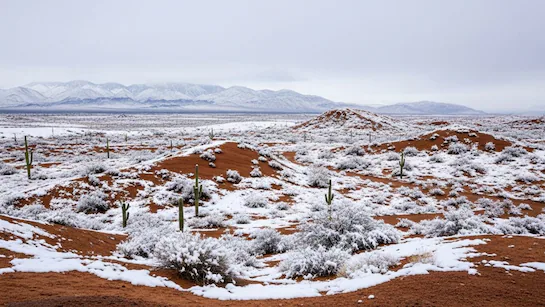
The defining feature of a desert is not scorching heat, but minimal precipitation. Many deserts sit at high altitudes or far from warming ocean currents, making them vulnerable to dramatic temperature drops. When cold air systems pass through and moisture is present, snow becomes not just possible, but surprisingly regular in certain regions.
Altitude plays a major role. Elevated desert plateaus experience thinner air, allowing temperatures to plunge rapidly after sunset. In winter months, these regions can fall well below freezing, creating the perfect conditions for snowfall. Geography and wind patterns further influence how cold air settles across these vast open landscapes.
The Sahara Desert and Its Rare Winter Surprise
The Sahara is the world’s largest hot desert, stretching across North Africa and synonymous with relentless heat. Yet, every few years, parts of the Sahara witness snowfall, particularly in higher regions of Algeria and Morocco. When snow blankets the dunes, it creates a striking contrast of white against deep orange sands.
Though these events are short-lived, they draw global attention. Temperatures drop sharply at night in the Sahara, and when winter storms pass through, snow becomes possible. While it melts quickly, the phenomenon serves as a reminder of how extreme desert climates can be, even in places associated with intense heat.
The Gobi Desert’s Icy Reality
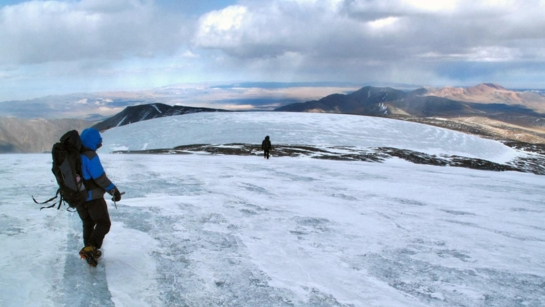
Spanning northern China and southern Mongolia, the Gobi Desert is one of the coldest deserts on Earth. Unlike the Sahara, snowfall here is not a rare occurrence but an expected part of winter. Temperatures regularly plunge well below freezing, and snow can linger for weeks.
The Gobi’s harsh winters shape the lives of nomadic communities and wildlife that have adapted to extreme cold. Snowstorms can be severe, transforming the desert into a frozen expanse that feels closer to the Arctic than the typical desert image most people hold.
Snowfall in the Atacama Desert
Often described as the driest place on the planet, Chile’s Atacama Desert rarely sees rain. However, snow occasionally falls in higher elevations, especially near the Andes Mountains. When it happens, the result is otherworldly, with salt flats, red rock formations and volcanoes dusted in white.
These rare snowfalls attract scientists as much as travellers. The Atacama’s extreme dryness combined with sudden snow events offers valuable insight into climate behaviour and even helps researchers study conditions similar to those on Mars.
America’s High Desert Snowfalls
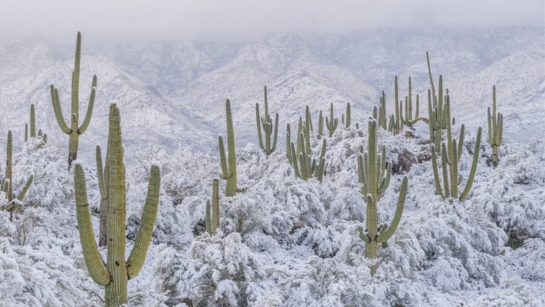
In the United States, deserts such as the Great Basin and the Mojave regularly experience snowfall. Cities like Las Vegas may be famous for neon lights and desert heat, but winter storms can bring snow to nearby desert landscapes, including Joshua Tree National Park.
Here, snow transforms rugged terrain into something unexpectedly serene. Spiky desert plants coated in frost and silent, snow-covered valleys reveal a softer, quieter side of these arid regions. For travellers, it’s a reminder that desert destinations can offer year-round surprises.
Why These Landscapes Fascinate Travellers
Snowfall in deserts captures attention because it defies expectation. It reshapes familiar environments into fleeting masterpieces that exist only briefly before melting away. For photographers, nature enthusiasts and adventurous travellers, these moments offer rare opportunities to witness nature’s contrasts in their most dramatic form.
From a travel perspective, such destinations appeal to those seeking something beyond the ordinary. Desert snowfalls often occur away from crowded tourist seasons, allowing visitors to experience iconic landscapes in complete stillness. It is this blend of rarity and beauty that makes snow-covered deserts unforgettable.
Climate Change and Shifting Desert Weather
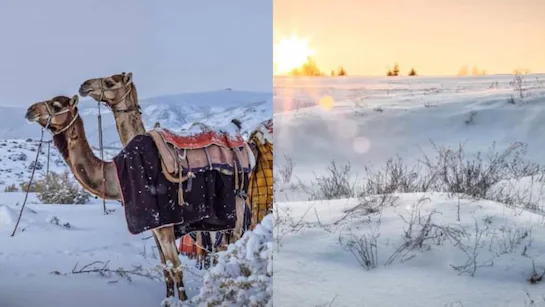
While snowfall in deserts is not entirely new, changing climate patterns are influencing how often and where these events occur. Some regions are experiencing more extreme weather swings, with colder winters and unexpected storms. Scientists continue to study whether these changes signal long-term shifts or short-term anomalies.
For travellers, this evolving climate highlights the importance of preparation and awareness. Visiting desert regions now requires understanding that conditions can vary dramatically, especially during winter months.
Rethinking What a Desert Really Is
Snowfall in deserts forces us to rethink simplistic definitions of geography. Deserts are complex ecosystems shaped by altitude, wind, and global climate systems. They are places of extremes, where scorching heat and freezing cold can exist within the same year.
These landscapes remind us that nature rarely fits neatly into categories. Whether it’s snow drifting across sand dunes or frost settling on cactus plants, deserts continue to surprise, offering stories that challenge assumptions and inspire curiosity.
Explore Categories
Loading categories...




.png&w=256&q=70)