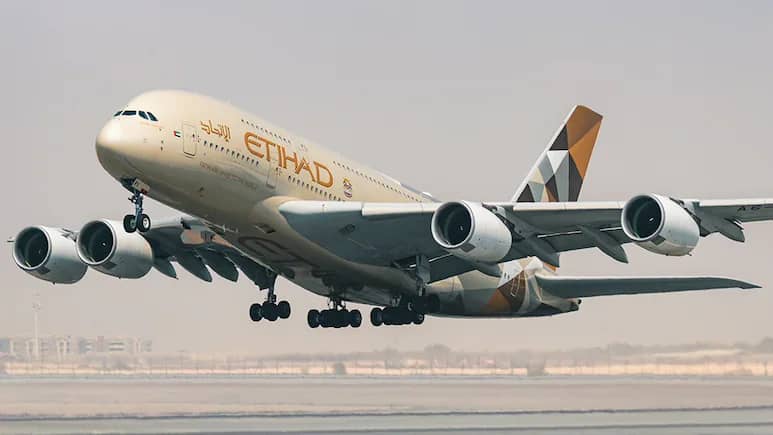
Gulf Conflict Pushes Delhi–Abu Dhabi Fares Up
Airfares between Delhi and Abu Dhabi have surged dramatically this week as tensions in the Middle East disrupt air routes and cancel hundreds of flights. Travellers are now paying significantly higher prices due to limited availability and rising fuel costs.
On this page
A sudden surge in airfares between India and the Gulf has left travellers shocked this week, as geopolitical tensions in the Middle East ripple through global aviation. Flights connecting Delhi and Abu Dhabi, one of the busiest travel corridors for Indian passengers, have seen ticket prices climb dramatically, in some cases reaching nearly ₹70,000 for a one-way journey.
The sharp increase comes at a time when thousands of travellers are attempting to move between India and the United Arab Emirates amid disruptions triggered by escalating military tensions involving Iran and its regional adversaries. As airlines adjust their operations to deal with safety concerns, limited airspace and rising operational costs, passengers are finding fewer available seats and significantly higher ticket prices.
The situation illustrates how quickly international conflicts can influence global travel, particularly on routes that depend heavily on Middle Eastern airspace.
Rising Fares on a Critical Travel Route
The Delhi–Abu Dhabi corridor has long been one of the most frequently used international routes for Indian travellers. Every day, thousands of passengers fly between the two cities for business, tourism and employment-related travel. Under normal circumstances, ticket prices on this route remain relatively stable due to high flight frequency and competition among airlines.
However, the recent conflict in the Middle East has changed the situation dramatically. Limited flight availability and growing passenger demand have created an imbalance that is pushing fares upwards. Reports indicate that one-way tickets on certain dates have surged to around ₹70,000, a significant jump compared to typical prices seen during regular travel periods.
The sudden price escalation has particularly affected travellers who need to fly urgently, such as expatriate workers returning to their jobs in the Gulf or families travelling for personal reasons.
Conflict Disrupts Middle East Airspace
The aviation industry across the region has been struggling to adapt to rapidly evolving geopolitical conditions. Military activity and security concerns have forced airlines to reroute or suspend services across several parts of the Middle East.
Airspace restrictions and safety advisories have disrupted some of the busiest global flight corridors. In response, many airlines have cancelled flights, diverted aircraft to alternative routes or temporarily suspended operations in certain sectors.
The impact has been widespread. According to aviation reports, hundreds of flights have been cancelled across the Gulf region, leaving passengers stranded and forcing airlines to reorganise schedules with limited capacity.
For travellers flying between India and the Gulf, the consequences are immediate: fewer flights, longer routes and significantly higher ticket prices.
Fuel Costs Add to Airline Pressure
Beyond airspace restrictions, rising fuel prices are adding further pressure on airlines worldwide. The ongoing conflict has triggered a surge in global oil prices, which directly impacts aviation fuel costs.
Jet fuel prices have reportedly jumped sharply following the escalation of hostilities in the region, forcing airlines to reconsider pricing structures and introduce fare increases to cover operational expenses.
Fuel represents one of the largest expenses for airlines and even a modest increase can quickly translate into higher ticket prices for passengers. In times of geopolitical instability, airlines often face a difficult balance between maintaining flight operations and managing escalating costs.
Massive Flight Cancellations Worldwide
The disruption is not limited to routes between India and the Gulf. Globally, the aviation sector is experiencing one of its most significant disruptions in recent years.
Thousands of flights across multiple regions have been affected as airlines adjust their schedules to avoid conflict zones. Major carriers have cancelled services, rerouted aircraft and issued travel advisories for passengers planning to fly through the Middle East.
Some airlines have also extended the suspension of services to certain Middle Eastern destinations as a precautionary measure while monitoring developments in the region.
The result is a ripple effect across international travel networks, impacting routes that connect Asia, Europe and North America through Gulf hubs.
Travellers Face Uncertainty and Limited Seats
For passengers trying to secure flights during this period, the biggest challenge is availability. With many services cancelled or operating at reduced frequency, the number of available seats has dropped sharply.
Travellers in the Gulf who wish to return to India are competing for limited seats, pushing demand even higher. In some cases, the rush for flights has been so intense that fares have risen multiple times above their usual levels.
The situation has also created challenges for travel planners and airlines alike, as schedules continue to change depending on the evolving geopolitical situation.
Aviation Industry Navigates a Complex Crisis
The aviation sector is no stranger to disruptions caused by geopolitical events. However, the current crisis highlights the interconnected nature of global air travel, where events in one region can quickly affect routes across the world.
Airlines are working to maintain operations while prioritising passenger safety. Some carriers are exploring alternative flight paths that bypass restricted airspace, although these routes often increase travel time and fuel consumption.
Longer routes, combined with higher fuel prices and insurance costs, inevitably push operating expenses upward. In such scenarios, airlines often have little choice but to adjust ticket pricing to sustain operations.
What Travellers Should Know
For passengers planning to travel between India and the Gulf in the coming weeks, flexibility will be essential. Experts advise travellers to check flight updates regularly, stay informed about airline advisories and book tickets as early as possible if travel is necessary.
Those with urgent travel plans may also need to consider alternative routes or nearby airports, as airlines continue to adjust schedules in response to the evolving situation.
While the aviation industry is accustomed to adapting quickly, the timeline for stabilisation depends largely on how the geopolitical situation unfolds.
A Reminder of Travel’s Global Sensitivity
The sudden spike in Delhi-Abu Dhabi airfares serves as a reminder that global travel is closely tied to political and economic stability. Conflicts, airspace closures and rising fuel costs can rapidly reshape the travel landscape.
For travellers, airlines and the broader tourism industry, the coming weeks will be closely watched as the aviation sector works to navigate one of the most complex travel disruptions in recent years.
Last Updated: October 12, 2026