Mathura Vrindavan Tour guide covering temples, darshan timings, Govardhan Parikrama, itineraries, travel tips, best time, and Delhi packages for a complete Braj yatra.
Every year, over five million devotees and travellers from across India and the world undertake a Mathura Vrindavan tour seeking darshan, peace, and a living connection to Lord Krishna's sacred land. Yet most arrive without a plan missing the Govardhan parikrama, skipping Barsana and Gokul, and leaving ashram experiences entirely untouched.
The problem is not enthusiasm. It's information overload dozens of temples, conflicting darshan timings, unclear transport options, and packages that promise "complete coverage" but deliver rushed sightseeing. For first-time visitors and returning pilgrims alike, planning a Mathura Vrindavan tour without a reliable guide means wasting precious time and missing the soul of Braj Bhoomi.
This guide is your promise: a point-by-point, deeply researched, and practically structured Mathura Vrindavan tour planner covering every keyword you searched darshan timings, yatra routes, ashram stays, Govardhan parikrama, the Delhi-Agra-Mathura-Vrindavan circuit, and package options for every budget. Whether you are a solo pilgrim, a family on a weekend yatra, or a group planning the full Braj experience, this page has everything you need to plan, book, and experience Mathura Vrindavan at its fullest.
Mathura Vrindavan Highlights
Topic | Description |
|---|---|
Birthplace of Lord Krishna | Mathura is the exact birthplace of Lord Krishna, worshipped for over 2,500 years. Shri Krishna Janmabhoomi is the most sacred stop on any Mathura Vrindavan tour. |
Land of Radha-Krishna Leelas | Vrindavan, just 10 km from Mathura, is where Krishna’s divine love story with Radha unfolded. Every lane, forest, and kund carries a story. |
Govardhan Sacred Hill of Krishna | Govardhan Hill, lifted by Lord Krishna on his little finger, is the centrepiece of one of the most revered yatras in Hinduism the 21 km Govardhan Parikrama. |
Festival Capital of India | Mathura and Vrindavan host the grandest Holi and Janmashtami celebrations, drawing millions of pilgrims and international travellers every year. |
Mathura & Vrindavan: Spiritual Significance & What Makes Braj Bhoomi Special
Located along the sacred Yamuna River in Uttar Pradesh, Mathura and Vrindavan form the heart of Braj Bhoomi the divine land where Lord Krishna was born, raised, and performed his legendary leelas (divine pastimes). For Vaishnava devotees, a Mathura Vrindavan tour is not merely a trip; it is a pilgrimage that cleanses the soul.
Mathura - The Eternal Birthplace
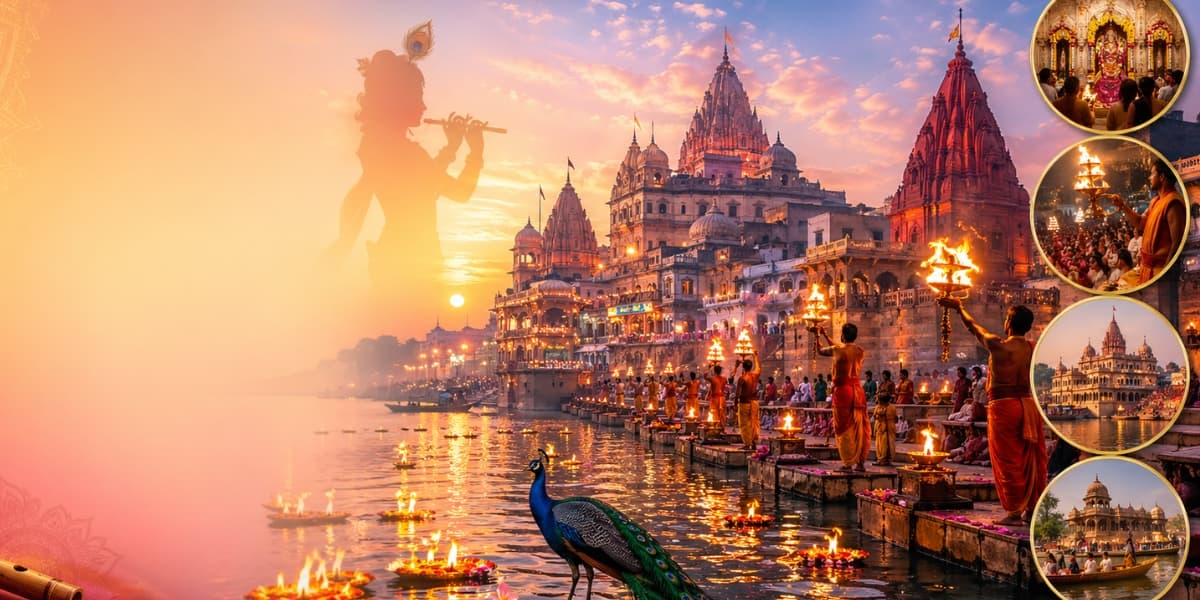
Mathura, one of India's seven Moksha-giving cities (Saptapuri), holds a recorded spiritual history spanning over 2,500 years. It is home to the Shri Krishna Janmabhoomi the precise spot where Lord Krishna was born inside a prison cell on Ashtami Tithi of Bhadrapada month. The city's ghats, particularly Vishram Ghat, are among the most sacred bathing spots in North India, where evening aarti transforms the Yamuna into a glowing river of devotion every single day.
Vrindavan - Where Every Stone Carries a Story
Situated just 10 km from Mathura, Vrindavan is considered the eternal abode of Radha-Krishna. The Yamuna Parikrama Marg, the 84 Kos Braj Yatra, and the countless nikunjas (divine groves) make Vrindavan unlike any spiritual destination in India. Banke Bihari Temple, Prem Mandir, ISKCON Vrindavan, Radha Raman Temple, and Madan Mohan Temple draw pilgrims from every corner of the world every day of the year.
The Braj Region - Five Sacred Towns in One Mathura Vrindavan Tour
A truly immersive Mathura Vrindavan tour covers the entire Braj region, which includes Mathura, Vrindavan, Govardhan, Barsana, and Nandgaon. Each town is connected to specific events in Krishna's life - making a multi-day Braj Yatra the most spiritually complete pilgrimage one can undertake in North India.
Top Temples & Darshan Guide
Knowing temple darshan timings before your Mathura Vrindavan tour is essential - many temples follow split schedules (morning and evening), and some now require prior online booking during peak seasons and festivals. Below is the most up-to-date darshan guide for 2025–26.
Key Temples in Mathura
Temple | Morning Darshan | Evening Darshan | Best Visit Time |
|---|---|---|---|
Shri Krishna Janmabhoomi | 5:30 AM - 12:00 PM | 4:00 PM - 9:30 PM | Early morning |
Dwarkadhish Temple | 6:30 AM - 10:30 AM | 5:00 PM - 9:00 PM | Morning (Mangala Aarti) |
Gita Mandir | 7:00 AM - 11:30 AM | 4:30 PM - 8:30 PM | Anytime |
Vishram Ghat | 6:00 AM (Sunrise) | 6:30 PM - 7:30 PM | Evening aarti |
Rangeshwar Mahadev Temple | 6:00 AM - 12:00 PM | 4:00 PM - 8:00 PM | Morning |
Key Temples in Vrindavan
Temple | Morning Darshan | Evening Darshan | Special Note |
|---|---|---|---|
Banke Bihari Temple | 7:45 AM - 12:00 PM | 5:30 PM - 9:30 PM | Parda darshan style; very crowded on weekends |
Prem Mandir | 8:30 AM – 12:00 PM | 5:30 PM - 8:30 PM | Illuminated shows nightly 7 to 8 PM |
ISKCON Temple Vrindavan | 4:30 AM - 1:00 PM | 4:15 PM - 8:30 PM | International devotees; English service daily |
Radha Raman Temple | 8:00 AM - 12:00 PM | 6:00 PM - 9:00 PM | One of Vrindavan's oldest and most revered temples |
Madan Mohan Temple | 8:00 AM - 12:00 PM | 5:00 PM - 8:30 PM | Hilltop temple; best view of Yamuna |
Govind Dev Temple | 4:30 AM - 12:00 PM | 5:30 PM - 8:30 PM | Mughal-era architecture; historic significance |
Katyayani Peeth | 8:00 AM - 12:00 PM | 6:00 PM - 8:00 PM | Entry closed after sunset (mystical beliefs) |
Radha Damodar Temple | 8:00 AM - 12:00 PM | 5:30 PM - 8:30 PM | Sacred samadhi of Jiva Goswami |
2026-27 Update: Several major temples in Vrindavan, including Banke Bihari Temple, now operate extended evening darshan hours during peak seasons, with some temples remaining open till around 9:30 PM. During major festivals like Holi and Janmashtami, crowd-management systems and regulated entry arrangements may apply at popular temples such as Shri Krishna Janmabhoomi. Visitors are advised to check official temple notices before travel, as timings and entry procedures can change during festival periods
Temples Outside Mathura–Vrindavan (Braj Region)
Temple/Site | Location | Significance | Distance from Mathura |
|---|---|---|---|
Radhaji Temple (Ladli Ji) | Barsana | Birthplace of Radha Rani | 42 km |
Nandishwar Temple | Nandgaon | Home of Nanda Maharaj (Krishna’s father) | 50 km |
Brahma Kund | Govardhan | Sacred pond; starting point of Govardhan Parikrama | 23 km |
Radha Kund & Shyama Kund | Govardhan | Twin sacred ponds of Radha-Krishna | 26 km |
Dauji Mandir | Gokul | Temple of Lord Balarama | 13 km |
Govardhan Parikrama - The Sacred 21 km Yatra Around Giriraj Maharaj
No Mathura Vrindavan tour is truly complete without the Govardhan Parikrama. This sacred circumambulation of Govardhan Hill - worshipped as Giriraj Maharaj, considered a direct form of Lord Krishna - is one of the most spiritually powerful acts a devotee can perform in the Braj region.
Topic | Details |
|---|---|
Total Distance | Outer (Badi) Parikrama: 21 km. Inner (Chhoti) Parikrama: 8 km. For elderly or families, e-rickshaws are available for symbolic parikrama. |
Time Required | Walking the full Govardhan Parikrama takes 5–7 hours on foot. With temple stops and darshan at each kund, allow 7–9 hours for a complete yatra. |
Starting Point | Most pilgrims begin from Brahma Kund or Daan Ghati. The route is circular, so you can start from any point and return to the same spot. |
Best Time | October to March is ideal - cool weather makes the 21 km walk comfortable. Avoid May–June for elderly yatris due to extreme heat. |
Key Stops on the Govardhan Parikrama Route
The Govardhan Parikrama Marg is lined with sacred spots, ancient temples, and mythologically significant kunds. Here is a point-by-point guide to the most important stops on this yatra:
Sacred Spot | Significance | Distance from Start |
|---|---|---|
Daan Ghati | Where Krishna playfully blocked Gopis and demanded offerings (daan/toll) | Starting zone |
Mansi Ganga | Sacred lake created by Krishna’s mind (manasa); ritual bathing spot | 3-4 km |
Mukharavind | The “face” of Giriraj Maharaj most sacred darshan point on the parikrama | 7 km |
Radha Kund & Shyama Kund | Twin ponds representing Radha and Krishna’s eternal love; bathing during Kartik Purnima is highly auspicious | 8-10 km |
Kusum Sarovar | Where Radha collected flowers for Krishna; known for stunning Mughal-Rajput architecture | 12 km |
Apsara Kund | Sacred pond off the beaten track; believed that celestial Apsaras bathed here | 14 km |
Govardhan | Centre of the parikrama; ancient settlement in the middle of the sacred route | Midway |
Brahma Kund | Lord Brahma’s sacred kund; popular parikrama starting and ending point | End/Return |
Types of Govardhan Parikrama
Devotees perform Govardhan Parikrama in different ways depending on their physical ability and level of devotion. The standard walking parikrama is the most common during a Mathura Vrindavan tour. The more intense Dandavat Parikrama where devotees prostrate fully at every step is performed by sadhus and can take weeks or even months to complete. For families and elderly pilgrims, e-rickshaws and dedicated vehicles cover the outer parikrama route with stops at all major darshan points.
Yatra Tip: Start the Govardhan Parikrama by 5:30 AM to complete it before midday heat sets in and to catch the morning aarti at Radha Kund. Carry water, wear comfortable footwear, and chant "Jai Giriraj Maharaj" at each sacred spot for maximum spiritual benefit.
Ashram Stays in Vrindavan - Where to Stay for a Spiritual Experience
One of the most underrated aspects of a Mathura Vrindavan tour is the option to stay in an ashram rather than a conventional hotel. Vrindavan and Mathura host hundreds of ashrams, dharamshalas, and spiritual guesthouses many of which offer accommodation, prasad meals, morning prayers, kirtan sessions, and guided darshan for a fraction of hotel costs.
Types of Ashram Accommodation
Traditional Dharamshala
Basic, clean rooms typically free or at very low cost. Managed by trusts. Best for pilgrims focused purely on darshan and devotion. Facilities vary widely book early for festival season.
ISKCON Guesthouse
The ISKCON Krishna Balaram Temple campus offers well-maintained guesthouse accommodation with AC rooms, prasadam restaurant, guided morning programs, and multi-language devotional support.
Heritage Ashram Stays
Several centuries-old math (monastery) premises in Vrindavan welcome visiting devotees. These offer an immersive experience of traditional Vaishnava lifestyle waking at 4 AM for Mangala Aarti.
Modern Pilgrim Hotels
Vrindavan now has boutique spiritual hotels combining modern amenities with daily kirtan programs, temple visits, and guided Parikrama services ideal for families on a Mathura Vrindavan tour.
Notable Ashrams in the Vrindavan Mathura Area
Ashram / Stay | Location | Best For | Approx. Cost |
|---|---|---|---|
ISKCON Guesthouse | Vrindavan | International devotees, families | ₹800-₹3000/night |
Prem Mandir Dharamshala | Vrindavan | Budget pilgrims, clean facility | ₹300-₹600/night |
Radha Damodar Math | Vrindavan | Traditional Vaishnava experience | Donation-based |
MVT (Mayapur Vrindavan Trust) | Vrindavan | Long-term devotees, guided programs | ₹500-₹1500/night |
Government Tourist Bungalow | Mathura | Budget travellers, families | ₹400-₹900/night |
Hotel Brij Bhoomi | Mathura / Vrindavan | Comfortable mid-range stay | ₹1500-₹4000/night |
During major festivals like Janmashtami, Holi, and Kartik month, ashrams and dharamshalas fill up weeks in advance. It is strongly recommended to book your Mathura Vrindavan tour accommodation at least 4–6 weeks before visiting during festival season.
Day-by-Day Mathura Vrindavan Tour Itineraries
Choose the itinerary that matches your time and interests. These plans are crafted to maximize your darshan while avoiding rush-hour crowds at major temples.
Day 1: Delhi - Mathura - Vrindavan Darshan
Time / Activity | Details |
|---|---|
Early Morning | Departure from Delhi at 6:00 AM |
Arrival | Reach Mathura around 10:00 AM |
Temple Darshan | Shri Krishna Janmabhoomi, Dwarkadhish Temple, Vishram Ghat (Yamuna Ji) |
Travel | Proceed to Vrindavan (12 km) |
Stay | Hotel check-in & rest |
Evening Darshan | Prem Mandir (Light Show), ISKCON Temple Vrindavan, Nidhivan (outer darshan) |
Night Stay | Vrindavan |
Day 2: Vrindavan - Govardhan - Barsana
Time / Activity | Details |
|---|---|
Early Morning Darshan | Banke Bihari Temple, Radha Raman Temple, Seva Kunj |
Travel | Drive to Govardhan (22 km) |
Darshan | Govardhan Hill, Radha Kund & Shyama Kund |
Travel | Proceed to Barsana (23 km) |
Temple Visit | Radha Rani Temple (Barsana Dham) |
Return | Back to Vrindavan hotel |
Night Stay | Vrindavan |
Day 3: Vrindavan - Gokul - Delhi
Time / Activity | Details |
|---|---|
Morning | Breakfast & checkout |
Visit | Gokul Raman Reti, Chaurasi Khamba Temple |
Return Journey | Travel back to Delhi |
Arrival | Reach by evening |
Delhi Agra Mathura Vrindavan Tour: The Golden Spiritual Circuit
The Delhi-Agra-Mathura-Vrindavan tour is the most popular multi-city package in North India, combining the architectural wonder of the Taj Mahal in Agra with the spiritual depth of the Mathura Vrindavan tour. This circuit is in high demand among both domestic and international travellers and is ideal as a 2-night/3-day or 4-night/5-day package.
Why Combine Delhi, Agra, Mathura & Vrindavan?
Delhi serves as the gateway well connected by road, rail, and air making it the natural starting point for this circuit. Agra, home to the Taj Mahal (a UNESCO World Heritage Site), Agra Fort, and Fatehpur Sikri, adds a historical and cultural layer to the trip. Mathura and Vrindavan then deliver the spiritual and devotional experience that completes one of India's most rewarding journeys.
Destination | Details |
|---|---|
Delhi (Gateway) | Starting point for most tours. Well connected by road and rail. You can visit Akshardham Temple, Birla Mandir, or Lotus Temple for spiritual depth before departure. |
Agra (164 km from Delhi) | Visit Taj Mahal (closed Fridays), Agra Fort, and Fatehpur Sikri. Sunrise at the Taj offers the best experience with fewer crowds. Ideal for an overnight stop. |
Mathura (58 km from Agra) | Key sites include Shri Krishna Janmabhoomi, Dwarkadhish Temple, and Vishram Ghat. Can be covered in half-day or full-day with evening aarti. |
Vrindavan (10 km from Mathura) | Visit Banke Bihari Temple, ISKCON Temple Vrindavan, Prem Mandir, and Keshi Ghat. Combine with Mathura for a full day; add Govardhan for a complete Braj experience. |
Distance & Travel Time Reference
Route | Distance | By Road | By Train |
|---|---|---|---|
Delhi - Mathura | 145 km | 2.5 to 3 hrs | 2 hrs (Mathura Jn.) |
Delhi - Vrindavan | 155 km | 2.5 to 3 hrs | 2 hrs + auto/e-rick |
Delhi - Agra | 204 km | 3 to 4 hrs | 2 hrs (Yamuna Expressway rail/fast trains) |
Agra - Mathura | 58 km | 1 to 1.5 hrs | 45 min |
Mathura - Vrindavan | 10 km | 20 to 30 min | Local auto/e-rick |
Mathura - Govardhan | 23 km | 40 to 50 min | Not available direct |
Mathura Vrindavan Tour Packages - Options for Every Budget
Whether you are planning a short 2 Nights/3 Days Mathura Vrindavan tour or a complete Braj Yatra covering Govardhan, Barsana, Nandgaon, and nearby spiritual destinations, there is a package designed for every type of traveler. Read here about Mathura Vrindavan tour packages with Proper details.
What to Look for When Booking a Mathura Vrindavan Tour Package
Not all tour packages offer equal value. When comparing Mathura Vrindavan tour packages, check whether VIP darshan (skipping long queues at Banke Bihari and Janmabhoomi) is included, whether the guide has spiritual knowledge of each temple and not just logistics, and whether accommodation is near the temples or far from the action. A trustworthy Mathura Vrindavan tour operator will be transparent about inclusion of e-rickshaw charges within temple zones, entrance fees, and meal arrangements.
Best Time to Visit Mathura Vrindavan & Festival Calendar
The best time for a Mathura Vrindavan tour is October to March, when the weather is cool and comfortable for both temple darshan and the Govardhan Parikrama on foot. However, festival seasons bring unparalleled devotional energy and are an experience in themselves.
Season | Months | Weather | Verdict for Mathura–Vrindavan Tour |
|---|---|---|---|
Best | Oct - Mar | 15–28°C; cool and pleasant | Ideal for parikrama, outdoor ghats, and all sightseeing |
Festival Peak | Aug - Sep | Hot, humid; monsoon possible | Janmashtami unmissable; book months in advance |
Festival Peak | Mar | Warm; spring colours | Holi & Lathmar Holi world-famous; extremely crowded |
Avoid (elderly) | Apr - Jun | 40–45°C; extreme heat | Very challenging for outdoor activities and parikrama |
Manageable | Jul - Aug | Monsoon; green scenery | Beautiful but humid; some ghats may flood |
Major Festivals on the Mathura Vrindavan Tour Calendar
Janmashtami (Aug/Sep)
Krishna's birthday. Temples open at midnight for the divine birth moment. Millions of devotees. Book accommodation 3–6 months in advance. Online darshan slots mandatory.
Holi & Lathmar Holi (Mar)
World-famous Holi in Barsana and Nandgaon (Lathmar Holi) celebrated a week before national Holi. Vrindavan Holi lasts an entire month Phoolwali Holi, Widows' Holi, and more.
Kartik Month (Oct–Nov)
The most auspicious month in Vrindavan. Radha Kund Snan on Kartik Purnima draws hundreds of thousands. 84 Kos Braj Yatra is traditionally done in this period.
Govardhan Puja (Nov)
Celebrated one day after Diwali. Govardhan Hill is the main centre of worship. Govardhan Parikrama sees maximum footfall on this day every year.
Practical Travel Tips for Your Mathura Vrindavan Tour
Dress Code:- Wear simple, modest clothing. Avoid shorts, sleeveless tops. Carry a dupatta or stole for temple entry.
No Phones in Some Temples:- Photography is prohibited inside Banke Bihari and some other shrines. Respect the rule guards are strict.
Strictly Vegetarian:- Mathura Vrindavan is a non-violence zone. No meat, eggs, or alcohol anywhere in the Braj region. All restaurants serve pure vegetarian food. Read more about What to Eat Mathura Vrindavan
Footwear:- Remove footwear before entering all temples. Carry a small bag for shoes. Wear slip-on sandals for convenience on a busy darshan day.
Start Early:- Arrive at major temples before 8 AM to avoid crowds and heat. Early morning atmosphere in Vrindavan is spiritually unmatched.
Carry Cash:- Many dharamshalas, rickshaws, and small shops do not accept cards. Keep ₹500 to ₹1000 in small change for daily expenses.
Use E-Rickshaws:- Electric rickshaws are now the primary transport in Vrindavan temple zones. Negotiate fixed rates before boarding - ₹50 to ₹150 for short trips.
Stay Hydrated:- Carry a reusable water bottle. Free clean water stations are now installed at key points along Govardhan Parikrama Marg (2025 UP Tourism update).
Beware of Monkeys:- Monkeys are common at Vrindavan ghats and Govardhan. Keep bags closed, avoid eye contact, and do not carry open food in your hands near monkey-heavy zones.
FAQ's
Helpful Resources
Related Pages
Apr 27, 2026 | 1 Min Read
Last Updated: May 28, 2026