

India has revised passport fees for the first time in 14 years, with the new rates effective from 1 July 2026. Learn the updated charges for fresh passports, renewals, Tatkal services, Police Clearance Certificates, and overseas applications. Compare the old and new fees, understand who is affected, and discover practical tips to save money when applying.
On this page
Rakesh had been putting off his passport renewal for almost eight months. Work kept getting in the way, and honestly, there was no urgency. Then one evening in June, his cousin sent him a message that made him sit up: "Passport fees are going up from July 1. Apply now if you can." He laughed it off at first. Fourteen years without a fee hike, and it had to happen right when he finally had time to apply? But the message was true, and by the next morning, thousands of Indians were doing exactly what Rakesh did rushing to the Passport Seva portal before the clock ran out.
This is the story of that change, what it means for your wallet, and how you can still make smart decisions around it.
Why Has India Increased Passport Fees After 14 Years?
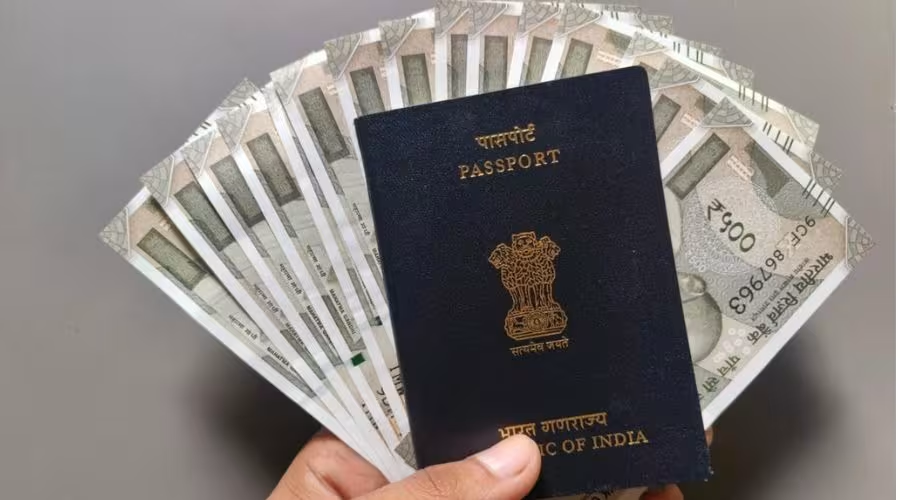
Passport fees in India had stayed frozen since 2012. Think about everything that has changed since then printing costs, security technology, staffing, digital infrastructure all of it went up, while the fee you paid at the counter stayed exactly the same. The Ministry of External Affairs finally caught up with reality through the Passports (Amendment) Rules, 2026, notified in a gazette on 20th June 2026.
The government's reasoning is fairly practical. Every passport issued today is a chip-enabled e-passport with advanced security features, and running the Passport Seva Kendra network with faster digital delivery, stronger cybersecurity, and better applicant support costs real money. Officials say the revised fees will help fund quicker processing and improved facilities across passport offices in India and abroad.
New Indian Passport Fees 2026: Complete Fee List
Here is what you will pay under the new structure, effective from 1st July 2026:
A fresh or reissue 36-page passport for adults now costs ₹2,500. A 60-page passport costs ₹3,500. If you need it urgently through Tatkal, the 36-page passport costs ₹5,000, while the 60-page Tatkal passport costs ₹6,000. If your passport was lost or damaged, replacing it now costs up to ₹8,500. The Police Clearance Certificate, or PCC, which many travellers need for work visas abroad, has gone up from ₹500 to ₹750. For Indians applying from overseas, a fresh 36-page passport under normal service costs 125 US dollars, and Tatkal processing overseas costs 250 US dollars.
One relief remains untouched. A 10% discount on the normal fee still applies to fresh applications for children up to 8 years old and senior citizens above 60. This discount does not apply to reissues or renewals, only fresh applications.
Old vs New Passport Charges
To understand the real jump, it helps to compare the numbers directly.
Passport Service | Old Fee | New Fee (From 1 July 2026) | Increase |
|---|---|---|---|
Fresh/Reissue of 36 Pages (Normal) | ₹1,500 | ₹2,500 | ₹1,000 |
Fresh/Reissue of 60 Pages (Normal) | ₹2,000 | ₹3,500 | ₹1,500 |
Tatkal of 36 Pages | ₹3,500 | ₹5,000 | ₹1,500 |
Tatkal of 60 Pages | ₹4,000 | ₹6,000 | ₹2,000 |
Police Clearance Certificate (PCC) | ₹500 | ₹750 | ₹250 |
Lost/Damaged Passport Replacement | Up to ₹6,500 | Up to ₹8,500 | Up to ₹2,000 |
Overseas of Fresh 36 Pages (Normal) | $100 (approx.) | $125 | $25 |
Overseas of Fresh 36 Pages (Tatkal) | $200 (approx.) | $250 | $50 |
A 10% discount on the normal fee still applies to fresh applications for children up to 8 years old and senior citizens above 60, so the numbers above will be slightly lower for those two groups.
Revised Fees for Fresh Passport, Renewal, Tatkal & PCC
Here's something worth knowing before you panic about the numbers. Fresh applications and renewals or reissues are charged at the same rate, so there is no separate "renewal penalty" built into this hike. Tatkal remains the premium option for anyone who needs their passport within a week or two, and that premium has widened compared to before. The PCC fee hike may seem small in isolation, but for professionals applying for jobs in the Gulf, Europe, or Southeast Asia, this is one more document cost added to an already long checklist of visa paperwork.
Who Will Pay the Higher Passport Fees?
Practically everyone applying for a passport from 1st July 2026 onward pays the new rate, whether they are first-time applicants, people renewing an expired passport, NRIs applying from abroad, or families adding a child's name to their travel plans. Students heading overseas for higher education, professionals applying for work visas, and families planning their first international holiday will all notice this change directly in their travel budget.
When Do the New Passport Charges Take Effect?
The new fee structure applies to every application submitted and paid for on or after 1st July 2026. The date that matters is not your appointment date or the date your passport is finally issued it is the date you complete your payment online. Anyone who paid before 1st July locked in the old, lower fee, regardless of when their appointment at the Passport Seva Kendra actually takes place.
How the Passport Fee Hike Will Impact Indian Travellers
For most people, the increase is manageable rather than alarming. A passport is valid for ten years, so an extra ₹1,000 on the normal fee works out to roughly ₹100 a year, which is less than what most travellers spend on a single meal during a trip abroad. Where the impact is sharper is for families applying for multiple passports at once, or for anyone forced into Tatkal because of a sudden trip, a lost passport, or an upcoming visa deadline. If you're already budgeting for visa fees, flight tickets, and travel insurance, this hike adds one more line item worth planning for in advance.
Tips to Save Money When Applying for an Indian Passport
If your passport is expiring in the next year, don't wait for the last minute. Renewing early, well before your travel dates, helps you avoid both the higher fee pressure of Tatkal and the rush that always follows any fee revision. Always double-check the exact amount on the official fee calculator on passportindia.gov.in before making a payment, since charges can vary slightly by category. Keep your documents ready in advance proof of address, date of birth, and identity so you don't end up needing Tatkal simply because of paperwork delays. And if your travel plan also involves a visa, start that process early too. Musafirbaba's visa guides for destinations like Dubai, Singapore, Vietnam, and Schengen countries can help you understand document requirements well before your passport even arrives, so your entire international trip stays on schedule instead of getting stuck at any single step.
The passport fee hike after fourteen years was overdue, and while it adds a bit more to your travel budget, it doesn't have to derail your plans. A little early planning, as Rakesh discovered, goes a long way in avoiding both the extra cost and the last-minute stress.
Explore Categories
Loading categories...



.png&w=256&q=70)