

An insightful exploration of global mobility rankings and how limited passport access influences travel planning and visa strategy.
On this page
Travel freedom rarely receives attention until it becomes restricted. For many people, a passport is simply a booklet enabling holidays, reunions, or business trips. Yet behind its pages lies an invisible hierarchy shaping opportunity and global access. The degree of mobility attached to a nationality affects far more than tourism; it influences education choices, professional expansion, and personal connectivity across borders.
Recent international mobility data reported through travel journalism has once again drawn attention to disparities between passports. Rankings based on entry privileges reveal how widely access varies between nations, demonstrating that border crossings are often governed by diplomatic relationships and administrative trust rather than geography alone. One passport currently sits at the lowest end of these rankings, offering visa-free or simplified entry to only a limited number of destinations worldwide.
While such statistics may appear abstract, their implications are tangible. Mobility affects the feasibility of spontaneous travel, the cost of documentation, and the time invested in preparation. Understanding how passport strength is assessed and what restricted access entails provides useful perspective for anyone navigating international travel planning or visa strategy.
Understanding How Mobility Rankings Are Calculated
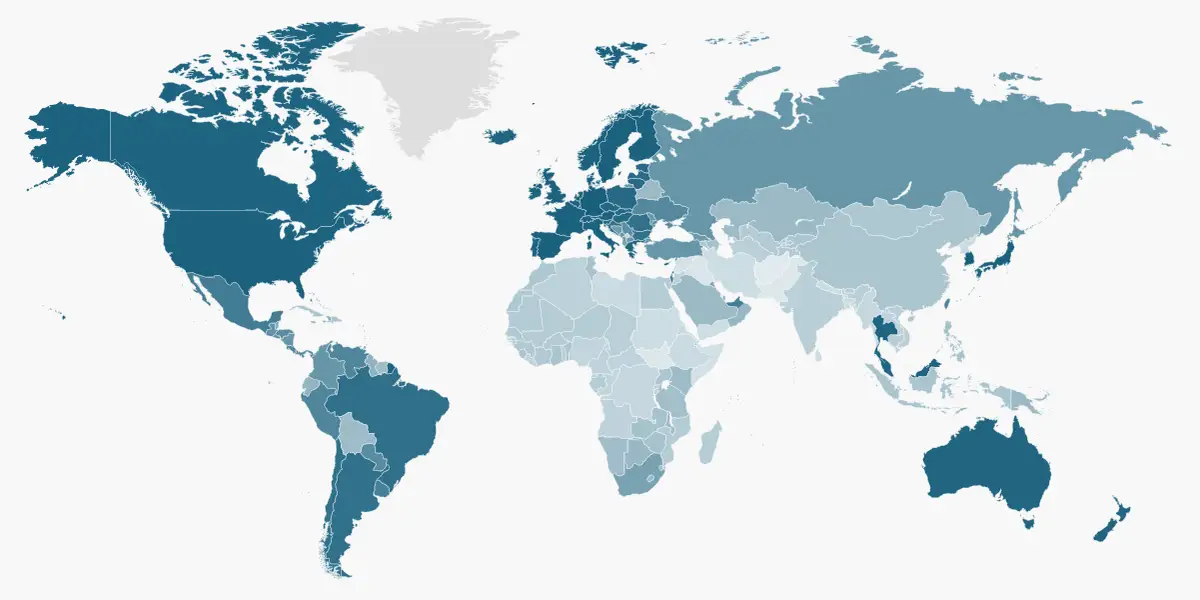
Global passport rankings are typically compiled using aviation and immigration data reflecting how many destinations permit entry without obtaining a visa beforehand. Visa-free travel, visas issued upon arrival, and electronic travel authorisations all contribute to accessibility scores because they remove administrative hurdles before departure. These measures collectively define how smoothly travellers can cross international borders.
The passport currently positioned at the lowest rank allows entry to roughly two dozen destinations through such simplified arrangements. Compared to top-tier travel documents that unlock access to most of the world, the contrast highlights how deeply mobility inequality persists within international systems. This imbalance stems from diplomatic engagement levels, bilateral agreements, and security cooperation between governments rather than from tourism demand alone.
Accessible destinations for this passport are dispersed across parts of Africa, Asia, and Oceania, including island states and neighbouring regions that maintain flexible entry structures. In some cases travellers may obtain permission upon arrival, while others permit digital authorisations prior to departure. Although the range is narrow, it demonstrates that mobility restrictions rarely eliminate movement entirely; instead they redefine routes and preparation requirements.
Such rankings also evolve continually. Diplomatic relationships shift, political stability fluctuates, and immigration policies adapt in response to global events. Mobility strength should therefore be understood as a dynamic indicator reflecting international cooperation rather than a permanent classification. Observing these fluctuations provides valuable context for professionals advising on travel or monitoring border policy trends.
The Political And Administrative Forces Behind Limited Access
 14Sep25 (1).webp "Factors influencing passport travel restrictions worldwide")
Restricted passport mobility is often rooted in broader geopolitical and administrative considerations. Governments evaluate reciprocal agreements, migration patterns, and compliance records when determining visa flexibility. Where overstays or irregular migration risks are perceived to be higher, authorities may enforce advance screening through traditional visa processes rather than permitting arrival-based entry.
Security perception further shapes these decisions. Immigration systems rely increasingly on data exchange and intergovernmental collaboration. Where such infrastructure or trust frameworks remain limited, visa scrutiny becomes a precautionary mechanism. This approach is less about punitive restriction and more about risk management within national border strategies.
Diplomatic representation also plays a role. Countries with wider global engagement tend to negotiate more reciprocal entry privileges, whereas limited diplomatic reach can reduce negotiation capacity for visa-waiver agreements. Economic influence, tourism flows, and regional alliances similarly shape mobility outcomes over time.
These interconnected forces demonstrate why passport rankings should not be viewed solely as travel conveniences. They represent the culmination of political dialogue, economic positioning, and institutional cooperation factors extending well beyond the control of individual travellers.
Navigating Mobility Gaps In A Connected World
 14Sep25 (2).webp "Travel planning strategies with restricted passport mobility")
The practical implications of restricted mobility extend into everyday planning decisions. Travellers working with limited access must devote additional attention to application timelines, supporting documentation, and destination selection. Appointment scheduling, financial verification, and compliance preparation become integral components of the journey long before departure dates are finalised.
At the same time, constrained access encourages strategic flexibility. Exploring destinations aligned with existing entry privileges often reveals cultural and natural experiences overlooked by mainstream tourism routes. Emerging travel regions frequently offer affordability, authenticity, and environmental richness that rival more commonly visited locations. Adaptability transforms limitation into discovery when approached with informed perspective.
Within the visa advisory landscape, mobility disparities reinforce the importance of accurate guidance and updated regulatory awareness. Professionals operating in this domain must continuously track procedural updates, digital authorisation systems, and bilateral policy changes to ensure travellers receive realistic pathways rather than outdated assumptions. Education and transparency remain essential in building trust and improving application outcomes.
Ultimately, passport strength serves as a reflection of global interconnectedness. Rankings highlight inequalities, but they also reveal opportunities for policy evolution and diplomatic progress. Travel freedom is neither static nor universally distributed; it shifts alongside international relationships and institutional confidence. Recognising these dynamics encourages more thoughtful planning and fosters greater understanding of how mobility shapes human experience in an increasingly interdependent world.
Explore Categories
Loading categories...



.png&w=256&q=70)